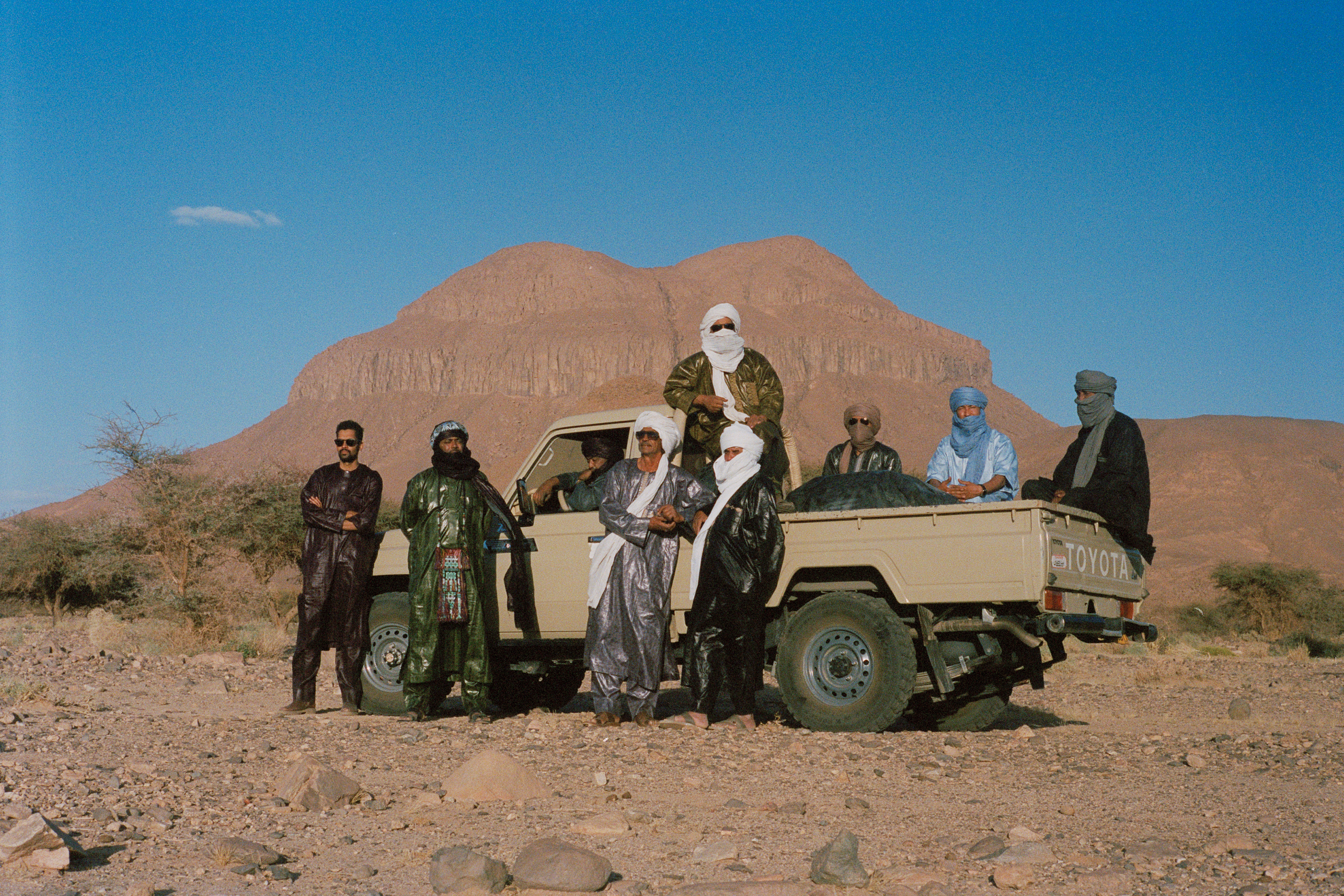
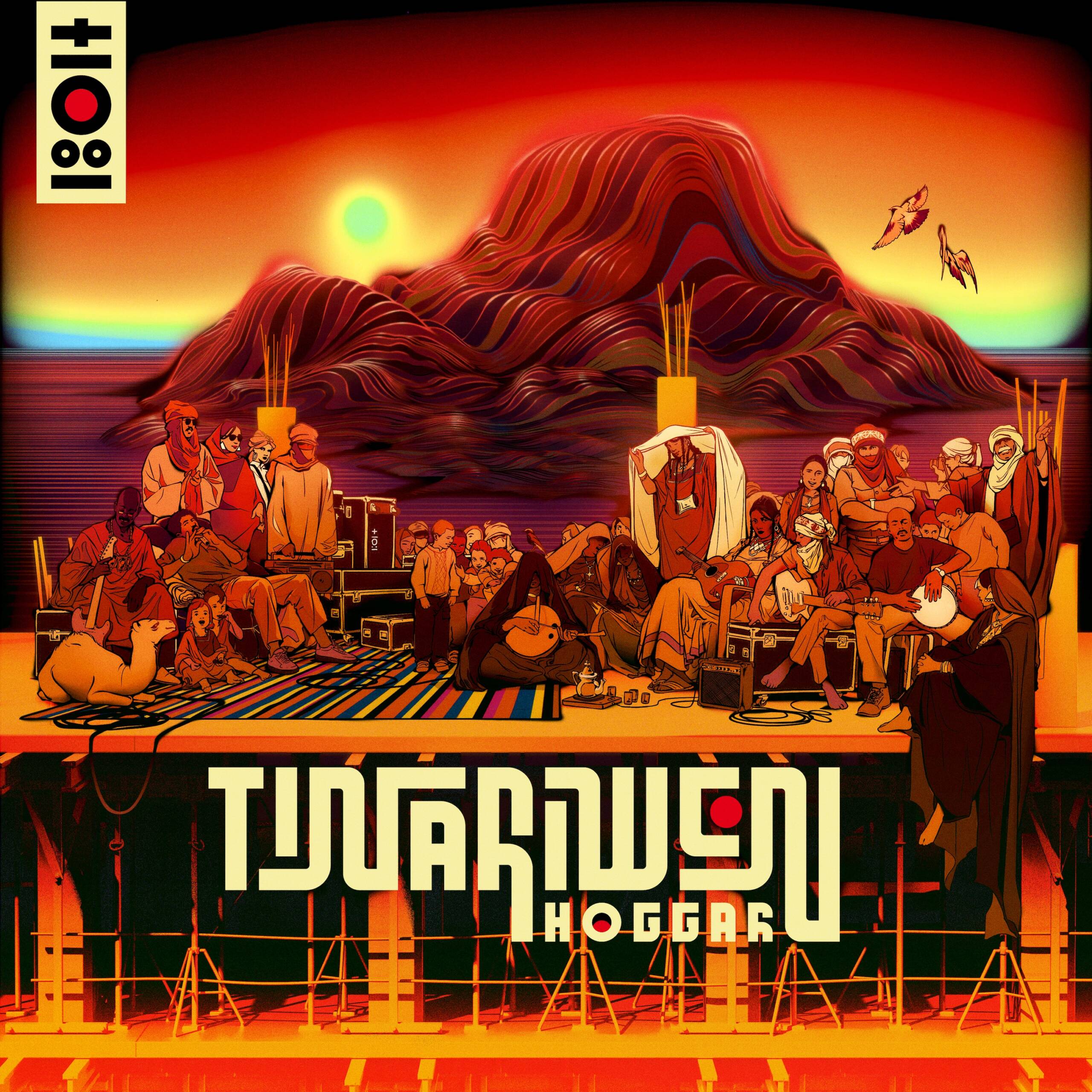
10 albums and over 45 years into their storied career, Tuareg musical pioneers and Grammy-winners Tinariwen are returning to their roots. Fierce advocates for their people’s nomadic culture that exists in the desert borderlands between Mali and Algeria, Tinariwen’s bluesy, guitar-driven music has found global acclaim over the past two decades for its lively blend of Tamasheq-language politicism, syncopated rhythms and soaring melody. On Hoggar, their tenth album, they now stake their claim as elders of this Tuareg musical tradition, going back to their early years of songwriting with acoustic guitars and communal singing around the desert campfire, while also passing the torch onto a younger generation of featured musicians who can continue to keep the flame of rebellion and defiance alive.
Typically choosing to record their albums among the arid landscape of the Central Saharan desert and tuning into the sounds of nature as they find their melodies, the band has in recent years been forced to find new locations for their creativity due to the political unrest in Mali. With founding members of the band now relocated to Algeria they found a new home to record Hoggar in a studio set up by younger Tuareg band Imarhan in the southern city of Tamanrasset.
“It’s the city with the biggest Tuareg population in Algeria and it’s also where the band started making music back in 1979 when they were refugees,” longtime collaborator and producer Patrick Votan says. “Since the Imarhan studio was already there, it became the perfect setting to bring all the generations of Tuareg musicians together and to begin exploring once again the raw-edged sound they first became known for.”
While previous records like 2023’s Amatssou saw the group collaborate with Bob Dylan and Willie Nelson producer Daniel Lanois, on Hoggar the band looked closer to home. Gathering with the local Tuareg musical community every day for a month, founding members Ibrahim Ag Alhabib, Abdallah Ag Alhousseyni and Touhami Ag Alhassane began penning songs of political unrest alongside younger artists like Imarhan’s Iyad Moussa Ben Abderrahmane, Hicham Bouhasse and Haiballah Akhamouk. The group also linked up with Sanou Ag Hamed, from the Tuareg band Terakaft, as well as collaborating with Tinariwen co-founder Liya ag Ablil, AKA Diarra, for the first time in 25 years. What emerged was a sense of reunion as well as an evolution of the Tinariwen sound.
“The members of Tinariwen were refugee workers of the desert who made music that became about a feeling of nostalgia for a distant home – something they termed ‘assouf,’” Votan says. “At the very beginning they had acoustic guitars, poetry and communal singing around the fire. That was the sound that emerged on Hoggar – everyone together in the same room, playing live without many overdubs but singing about today’s issues.”
The result is 11 tracks of yearning emotion, earworming, intricate melodics and the choral warmth of collective voices gathering in powerful harmony. Album opener “Amidinim Ehaf Solan” sets the tone with its group vocals and the searing guitar lines of Imarhan’s Iyad backing hopeful lyrics on better fortunes for the Tuareg people, while on the downtempo blues of “Tad Adounya” Iyad joins Ibrahim in a poignant duet of clattering hand claps and the celebration of intergenerational voices.
Throughout the record there are a number of remarkable firsts. On the undulating groove of “Asstaghfero Allah,” for instance, Tinariwen lead vocalists Ibrahim and Abdallah sing together for the first time in over 30 years, rather than follow the tradition of the songwriter singing their own song. Longtime fan José Gonzalez joins the group on the ever-shifting swing of “Imidiwan Takyadam” and a number of female vocalists also make a rare appearance – providing joyous harmonics on “Amidinim Ehaf Solan” and soulful, melismatic verses on the traditional Sudanese song “Sagherat Assan,” courtesy of Sudanese artist Sulafa Elyas.
“The female voice is very important in traditional Tuareg music but it is increasingly hard to find female singers today owing to restrictions placed on them being allowed to sing and train,” Votan says. “We were lucky to find singers like Wonou Walet Sidati, who used to record and tour with Tinariwen in the past, and Nounou Kaola who all feature on this album.”
Lyrically, Hoggar also broaches new and important territory. “Erghad Afewo” sees Ibrahim singing of the division within Tuareg tribes – a topic not often confronted within the community – while Abdallah’s “Aba Malik” rages against the devastating presence of Russian mercenaries the Wagner Group who are stoking division in north Mali.
“Tinariwen have always been poets of their time,” Votan says. “They write about what they are living through and that means it’s not just about the dancing and joy of their popular live shows, it’s also about people who are suffering and culture that is disappearing.”
Ultimately, with Hoggar Tinariwen stand proud as cultural signifiers, much like the Tuareg mountainscape that erupts from the Central Saharan desert and that gives the record its title. A defiant marker of presence visible for miles, the Hoggar mountains are a symbol of a homeland for displaced people, while Tinariwen’s music continues to make space for future generations of their song.
Publicity Contacts
Website
Press Kit
Photos