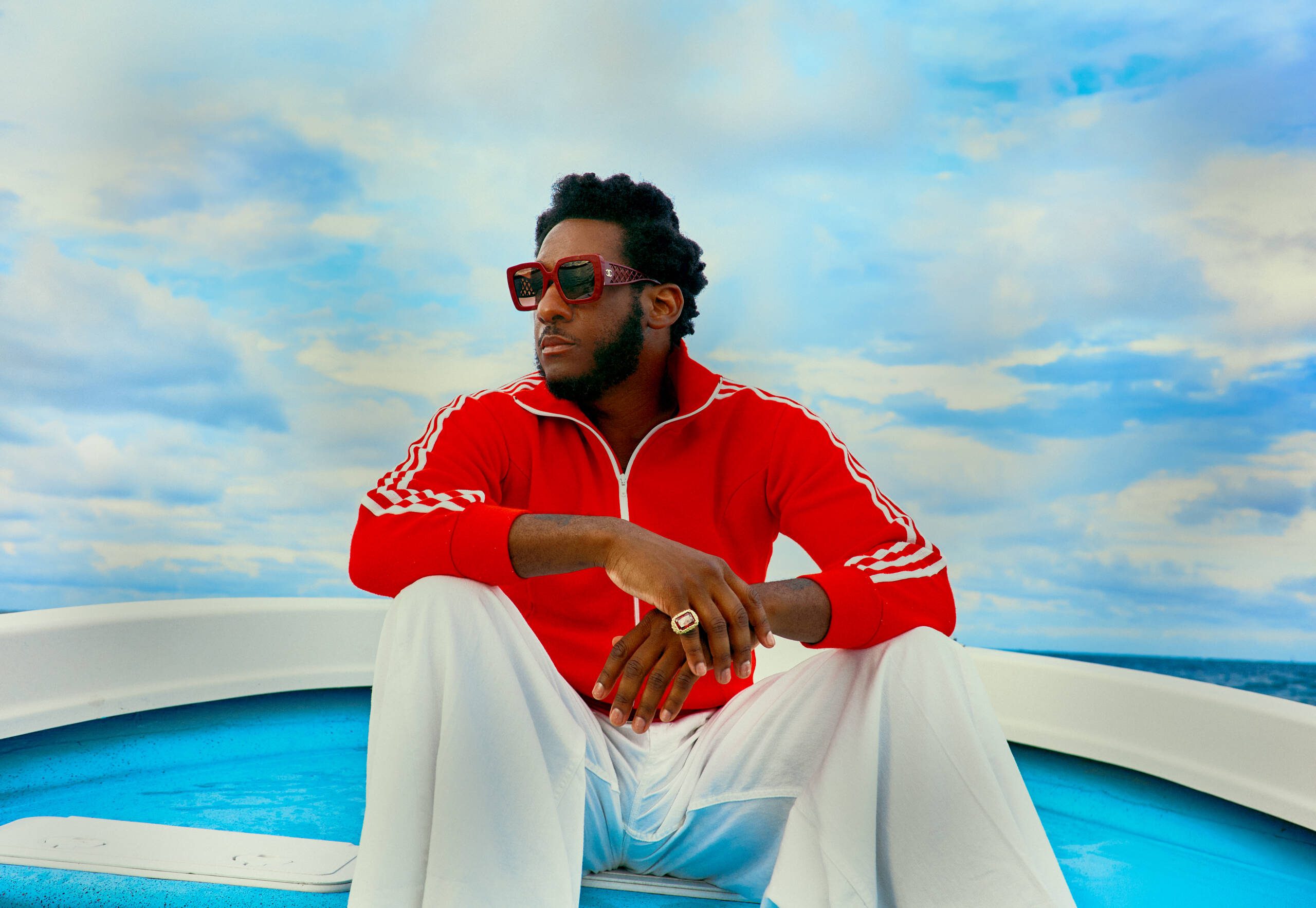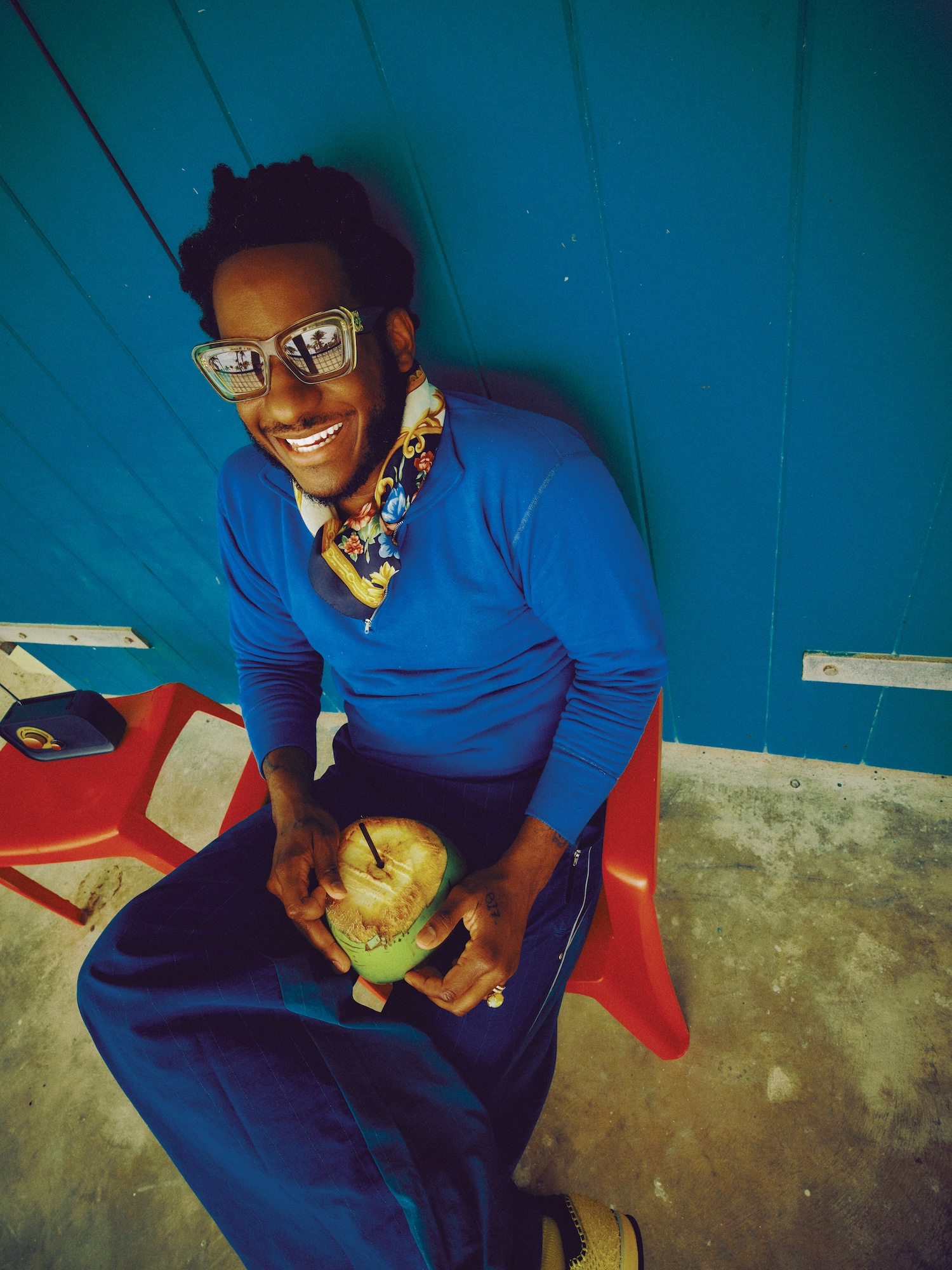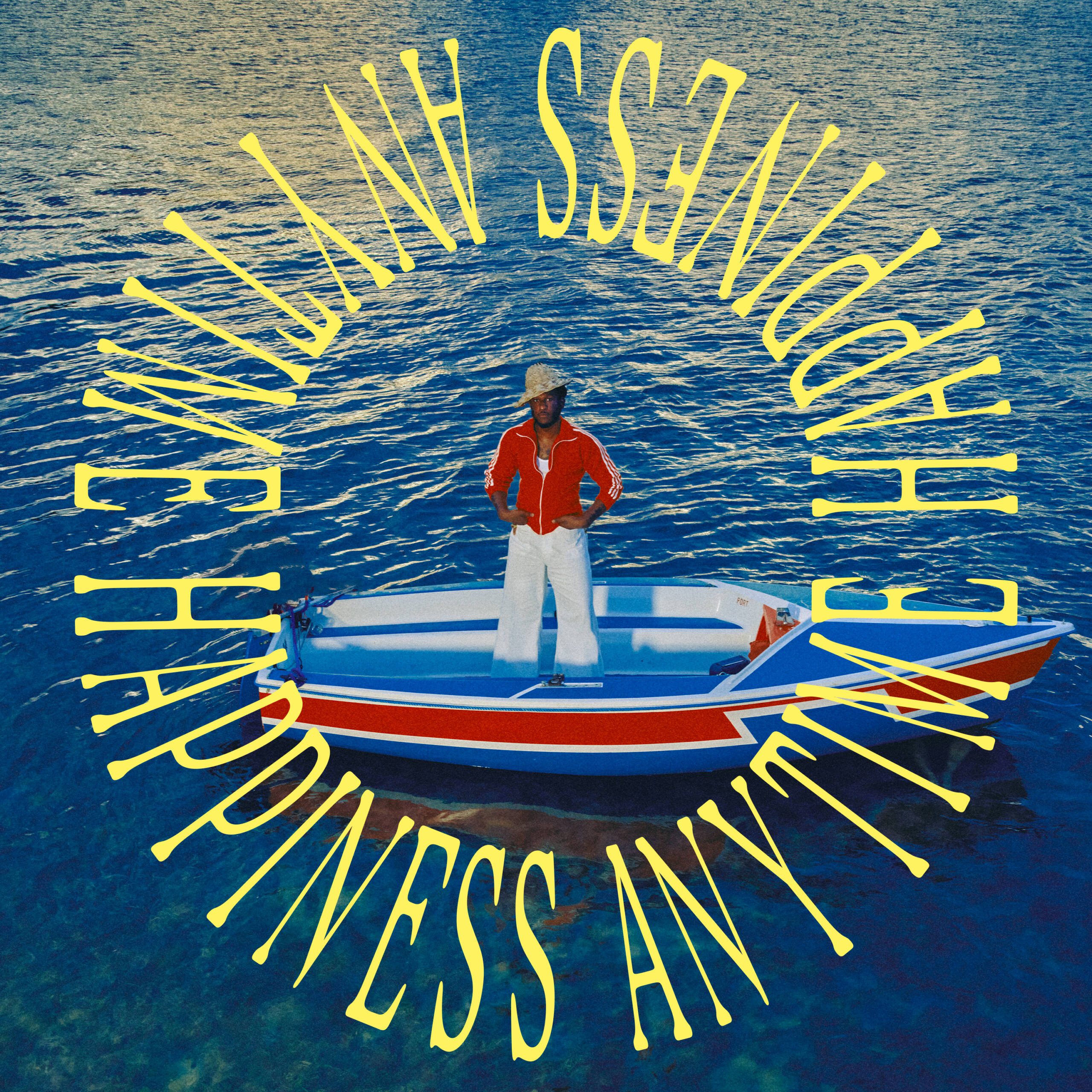
For nearly a decade, Leon Bridges has been searching. Not for success — he found that early as a throwback to 1960s soul. Not for validation — critics and audiences embraced him from the moment his voice emerged from Fort Worth, Texas, sounding as though it had traveled through several generations of Black American music before arriving in the present.
Instead, Bridges has spent much of his career searching for movement: a way to expand his wistful sound without losing the qualities that brought listeners toward him in the first place.
On Happiness Anytime, his new album produced by two-thirds of the British trio Jungle, that search takes a compelling turn. What began as a four-day writing session in Los Angeles quickly evolved into something much larger. After years of crossing paths at festivals and shows throughout Europe, Bridges and Jungle members Josh Lloyd-Watson and Lydia Kitto finally entered the studio together in April 2025. The chemistry was immediate.
“We’ve been such big fans of Leon,” Lloyd-Watson says. “We were keen to hit it off.”
They did more than that. Within those four days, the trio had completed six songs. More importantly, they’d discovered a shared creative dialect built on instinct and devoid of overanalysis. “First thought is the best thought,” Lloyd-Watson explains. “That’s where the emotion is. Anything after that becomes intellectualized, and that’s not really where music excels.”
The breakthrough arrived almost instantly. Lloyd-Watson and Kitto played Bridges a skeletal instrumental built around a Wurlitzer chord progression and a relaxed drum pattern. As soon as the track began, Bridges started singing. “Straight away he sang the first bit to ‘Your Love Is Electric,'” Lloyd-Watson recalls. “And I’m like, ‘Whoo, let’s go. This is it.'”
That moment became the blueprint for the entire album. In its finished form, “Your Love Is Electric” is a sweaty, overcast track with nightclubs in mind. It feels like 1 a.m. on the dance floor, when the music has consumed your body, and all you can do is move.
Unlike many contemporary recording projects that unfold across months — or years — Happiness Anytime was built through impulse. The collaborators adopted a simple rule: every session had to end with a completed song. “We aren’t leaving until we have a full track at the end of the day,” Lloyd-Watson says. “We didn’t want to have, ‘We’ll come back to this tomorrow.’ We wanted fully finished tracks.”
The approach worked because everyone understood their role. Bridges focused on feeling, storytelling, and vocal performance. Kitto brought melodic intuition and harmonic detail. Lloyd-Watson shaped the production, arrangements, and sonic structure. The result is an album that feels unusually cohesive, less like an artist hiring producers and more like three musicians discovering a shared vision.
That vision centered on reconnecting Bridges with the essence of what first made him resonate. Bridges had spent years experimenting with contemporary R&B, electronic textures, and new songwriting approaches, Lloyd-Watson and Kitto recognized an opportunity to honor those explorations while introducing something fresh. The idea was to create something festive, giving Bridges and his fans the permission to move at his shows.
“Leon said he wants to have music that he can dance to,” Kitto recalls. “He wants to have moments where he can put the guitar down and just dance and perform at the front.”
Groove became the organizing principle for the album. The first recording sessions produced songs that felt like natural intersections between Jungle’s rhythmic sensibilities and Bridges’ roots-oriented songwriting. Later sessions pushed further outward. By the time the collaborators reconvened in August 2025, they were drawing inspiration from Fela Kuti’s Afrobeat, Brazilian music, soul, disco, and South American rhythms.
“We’d been listening to a lot of South American music and Sergio Mendes,” Lloyd-Watson says. “We infused it with these Latin rhythms and African rhythms — music that had groove and soul and feeling.”
Those influences never feel ornamental, like a band recreating the past because it’s cool. Instead, they form the LP’s epicenter, with rhythms moving with purpose, basslines breathing without obstruction, and horn arrangements landing with force. At the center of it remains Bridges’ warm and expressive voice, pushing the LP to colorful highs.
Then there’s the album’s title, Happiness Anytime, which serves as both a mission statement and an invitation. “It’s music you can put on no matter how you’re feeling,” Kitto says, “and it makes you feel happy and it makes you want to get up and dance.”
Happiness Anytime was created with spontaneous joy as a guiding principle in the studio, asking listeners to find moments of light in the mundane aspects of daily existence, especially now when bliss feels more elusive in the culture of comparison. It’s an album meant to help us reset.
But beneath the brightness lies something more nuanced. Lloyd-Watson points to songs like “Tears of Joy” as reflections on sacrifice, purpose, and artistic longevity. “It’s about the legacy he’s built,” he says. “What being on the road means. What you sacrifice to give this artistry to the world.” Elsewhere, a song like “Illusion” hints at deeper frustrations and hard-won wisdom. “I’m here in the present,” Bridges repeats, “one step at a time.”
Those tensions give Happiness Anytime its depth. Joy is present throughout the record, but it isn’t naïve. It’s the type of joy one earns through a life well lived on stages, planes and tour buses. It’s the type of happiness you tap into after you’ve experienced so much uncertainty, yet the blessings are paramount.
Perhaps no song better illustrates the album’s spirit than “Take My Hand,” which underwent a dramatic transformation during recording. Unsure whether the original arrangement fully captured its potential, the team invited the legendary bassist Pino Palladino and the drummer Eric Harland into the studio.
“We said, ‘One take, go,'” Lloyd-Watson remembers with a laugh.
The musicians delivered.
“That’s how music used to be made,” he says. “Off you go, guys. One take. Let’s do it.”
Moments like that reveal what makes Happiness Anytime a special project. The album embraces spontaneity in an era obsessed with perfection. It values feeling over calculation, chemistry over strategy, and that’s why it feels so alive.
For Bridges, however, the significance feels more immediate. Following the release and critical acclaim of his fourth studio album, Leon, in 2024, it’s officially Leon Season once more.
“It just feels like it’s his time again,” Lloyd-Watson says.
Listening to Happiness Anytime, it’s hard to disagree.
“For me, happiness is not a feeling that you chase,” Bridges says in conclusion. “I want this album to be something that lingers with people and lingers in people’s bones. There’s this feeling that we have to fix the problems of the world; you feel inadequate or it can be debilitating. My role is to be light. I hope that comes across with this album.”
Publicity Contacts
Website
Photos