The first words Ahmed Gallab’s sister said to him after their mother called from the hospital were simple.
He’s gone.
Their father had died.
There is no metaphor hidden in the title of Sinkane’s new album. He’s Gone is a record about the death of Ahmed’s father and what happened afterwards: grief, memory, faith, family, Sudan, and the strange process of learning how to live when someone who helped define your world is suddenly no longer in it.
But here’s the surprise: this might also be the most immediate, melodic and downright beautiful Sinkane record yet.
Gallab didn’t initially intend to make an album about grief. Nor, perhaps, did he expect grief to lead him towards some of the most direct songwriting of his career.
“The songs simply became the place where I could begin to understand what had happened,” he says. “Making the record gave me permission to grieve and, eventually, became a kind of catharsis.”
Eventually, Gallab understood that something else had happened too:
“I thought I was making an album about losing my father. Instead, I started finding him and, ultimately, myself.”
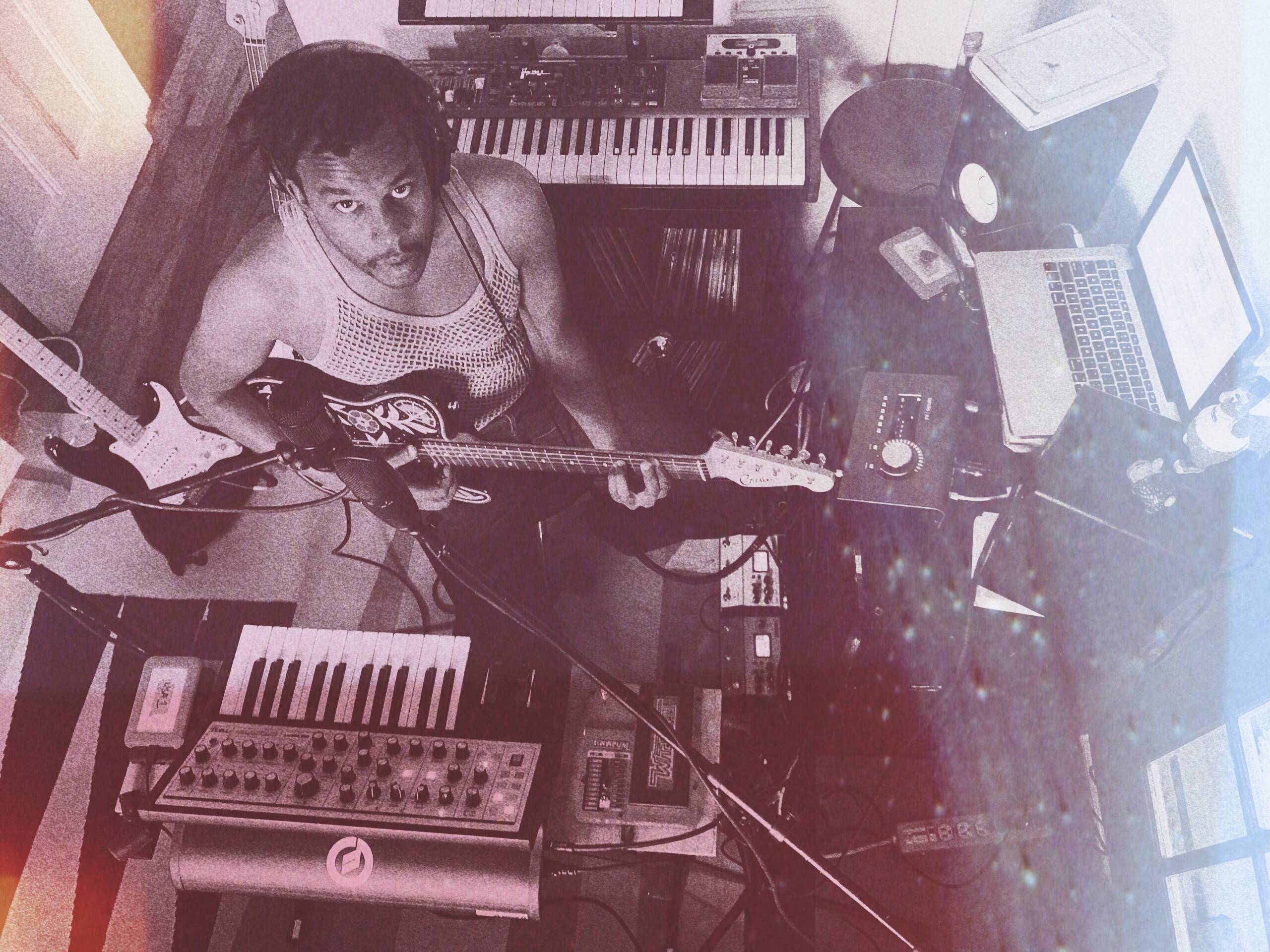
That discovery is at the heart of He’s Gone. For an artist who has spent much of his career bringing people together, He’s Gone began by turning inward. Sinkane’s previous album, We Belong, was an exuberant communal record, conceived as a love letter to Black music and made with a large cast of collaborators. He’s Gone takes almost the opposite approach. Gallab played nearly everything himself. He recorded, produced, engineered and mixed the album himself.And in doing so, something opened up.
There is a new confidence to these songs: choruses arrive and stay with you, melodies are allowed to be beautiful without qualification, grooves feel effortless. If earlier Sinkane records delighted in showing how many musical worlds could occupy the same space, He’s Gone makes all those influences feel completely instinctive.
Gallab cites Sade and D’Angelo among the record’s touchstones, and you can understand why. There is something of Sade’s remarkable economy here — sophisticated music that never needs to advertise its sophistication — alongside the warmth, rhythmic depth and sensuality of Voodoo. Erykah Badu, SAULT and contemporary Afrobeats are in the bloodstream too. This isn’t Sinkane “going pop”. It’s something more interesting: Ahmed Gallab discovering just how pop Sinkane could always have been.
“For the first time, I was able to follow the sound in my head all the way through, from the first idea to the final mix.”
That sound still encompasses a lot. East and West African music, Sudanese pop, Caribbean music, Black American music, Brazilian music, indie rock, ambient and electronic music all coexist here. Modern Afrobeats and Dancehall programming meets live African and Latin percussion; 808s and drum machines sit alongside congas, bongos and shakers. Dub techniques — delay, filtering, sudden subtraction, negative space — become part of the songwriting itself.Gallab once jokingly called Sinkane’s music “Whirreld Music.” These days he has a simpler description: World Music. Not as a genre, but almost literally: the sound of one person’s musical world. And this time he needed that entire vocabulary to talk about one thing: Grief.
The album begins with the Istirjāʿ, from the Qur’an: Indeed, to God we belong, and to Him we return — words of surrender and faith traditionally spoken upon hearing of a death. From there, He’s Gone follows grief not as a straight line towards resolution but as something unruly. It disappears and returns. It changes shape. It can coexist with joy, movement, love and — crucially on this record — a fantastic groove.
“It’s less about finding closure,” Gallab says, “and more about learning how to keep going.”
He wrote 24 songs while trying to understand that. “Good Grief” arrived first and barely changed. Then came months of nothing. Eventually the blockage disappeared and 15 songs arrived in two months. For a while Gallab thought he had made a double album. Slowly, 24 songs became ten — not necessarily the ten he liked most, but the ten the story required. Despite the solitude at its centre, He’s Gone isn’t without some extraordinary company.
On the title track, Yo-Yo Ma plays cello while Preservation Hall Jazz Band supplies the horns. Mdou Moctar lets loose on “So It Goes”, the album’s opening single, after what Gallab describes as essentially a cold call. Mississippi family gospel group Annie & The Caldwells appear on “After, Forever”.
These aren’t names added for effect. Each brought their own experience of loss to the record.
“Each understands grief in a deeply personal way,” Gallab says. “Their contributions helped give the album’s grief a larger, more universal voice.”
And then there is the cover.
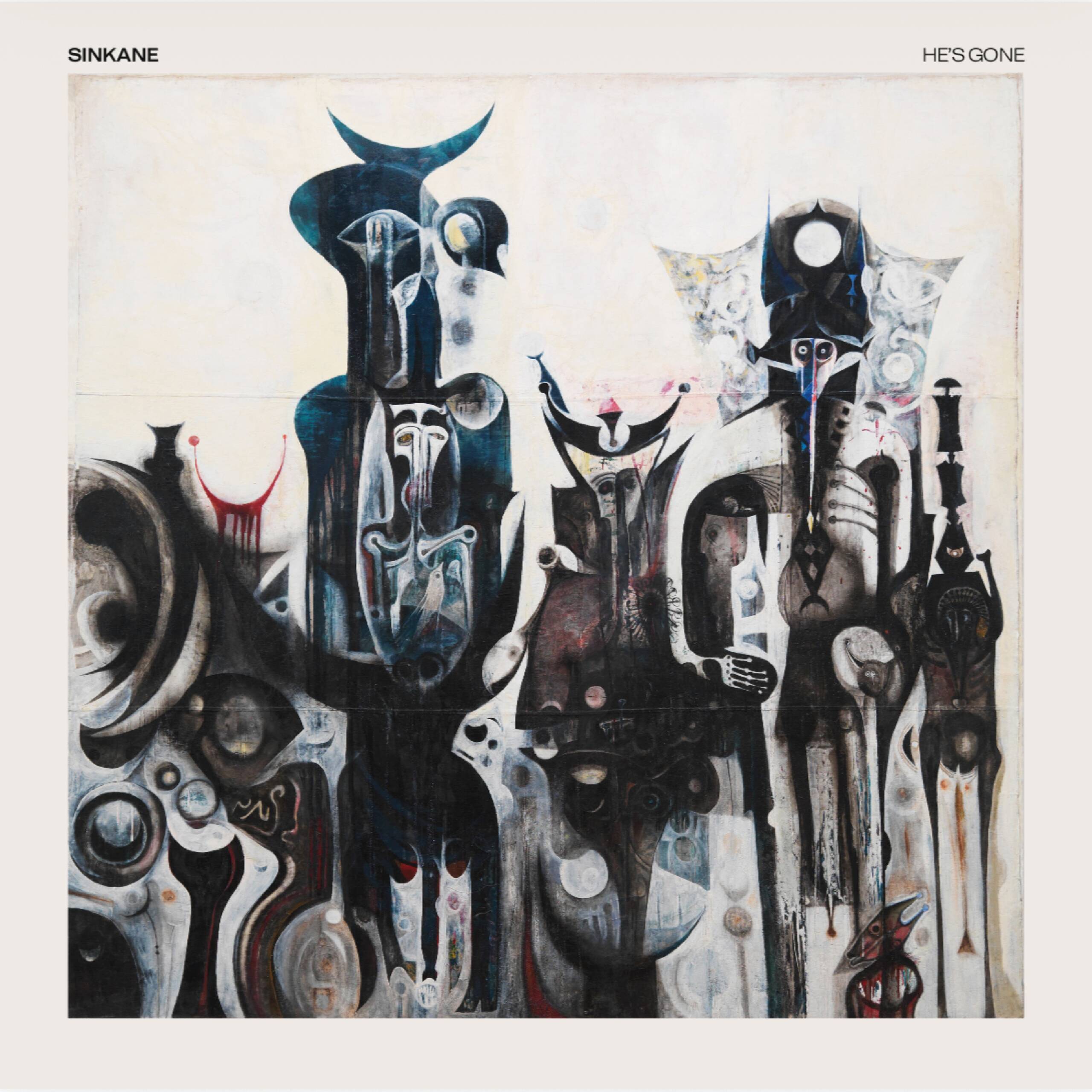
He’s Gone features Ibrahim El-Salahi’s celebrated painting Reborn Sounds of Childhood Dreams I, used with the permission of Tate and the artist’s family. El-Salahi, one of the defining figures of modern Sudanese art, was also a friend of Ahmed’s father.
Sudan, memory, art and family history therefore aren’t merely themes within He’s Gone. They’re present on its very surface. The connection has become more pronounced in unexpected ways. Since We Belong, Gallab has become a university professor, teaching music appreciation, theory and songwriting.
Both of his parents were professors. While making a record about losing his father, Gallab found himself inadvertently following him.
There is something in that coincidence that gets close to the heart of He’s Gone: the things we inherit without noticing; the gestures and ideas that survive people; the moment when grief reveals that someone who has disappeared is still present in the way you think, work, teach, listen or move through the world. And perhaps that’s why a record about death can sound so remarkably alive.
Gallab wanted He’s Gone to feel handmade and electronic, intimate and expansive. He became interested not only in what he could put into a song, but what he could take away. He played less guitar. He left holes. He allowed silence and suspension to become instruments.
But he also wrote songs. Big, warm, generous songs. Music with hooks and choruses and rhythm and pleasure at its centre. The sort of songs whose emotional weight can sneak up on you precisely because you’re already moving to them.
He’s Gone is a record about absence, but it refuses to be consumed by it. It’s grief you can dance to. It’s Sudan and Brooklyn, Sade and D’Angelo, dub and Afrobeats, drum machines and congas, memory and modernity. It’s Ahmed Gallab taking everything Sinkane has ever been and making it feel simpler, clearer and more emotionally direct.
Someone is here.
Then they’re gone.
The music keeps moving.
Publicity Contacts
Website
Photos