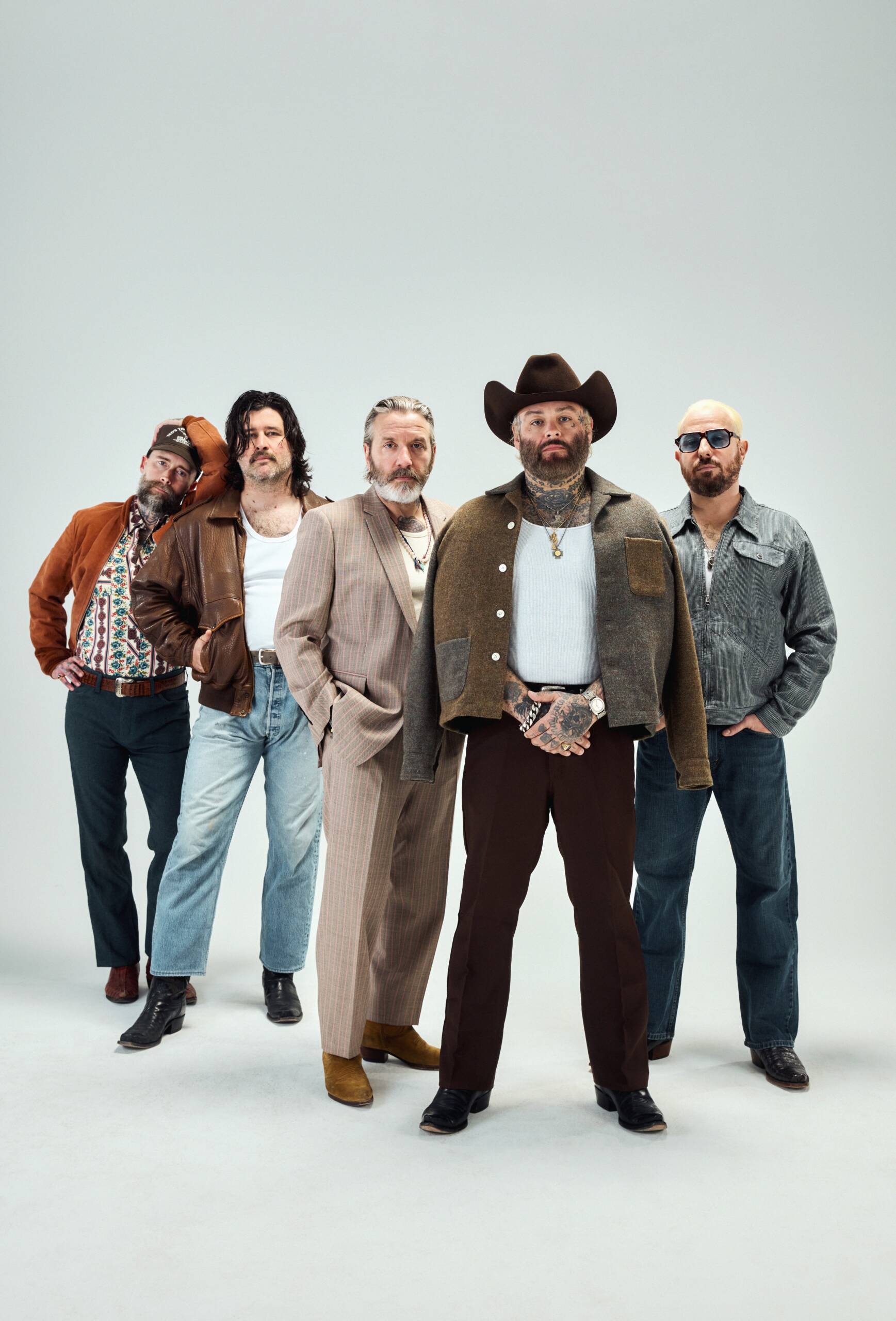
Alexisonfire has never been an easy band to pigeonhole. Although generally labeled as post-hardcore, the Ontario-formed quintet—vocalist George Pettit, vocalist/guitarist Dallas Green, guitarist/vocalist Wade MacNeil, bassist Chris Steele, and drummer Jordan Hastings—have always incorporated diverse influences.
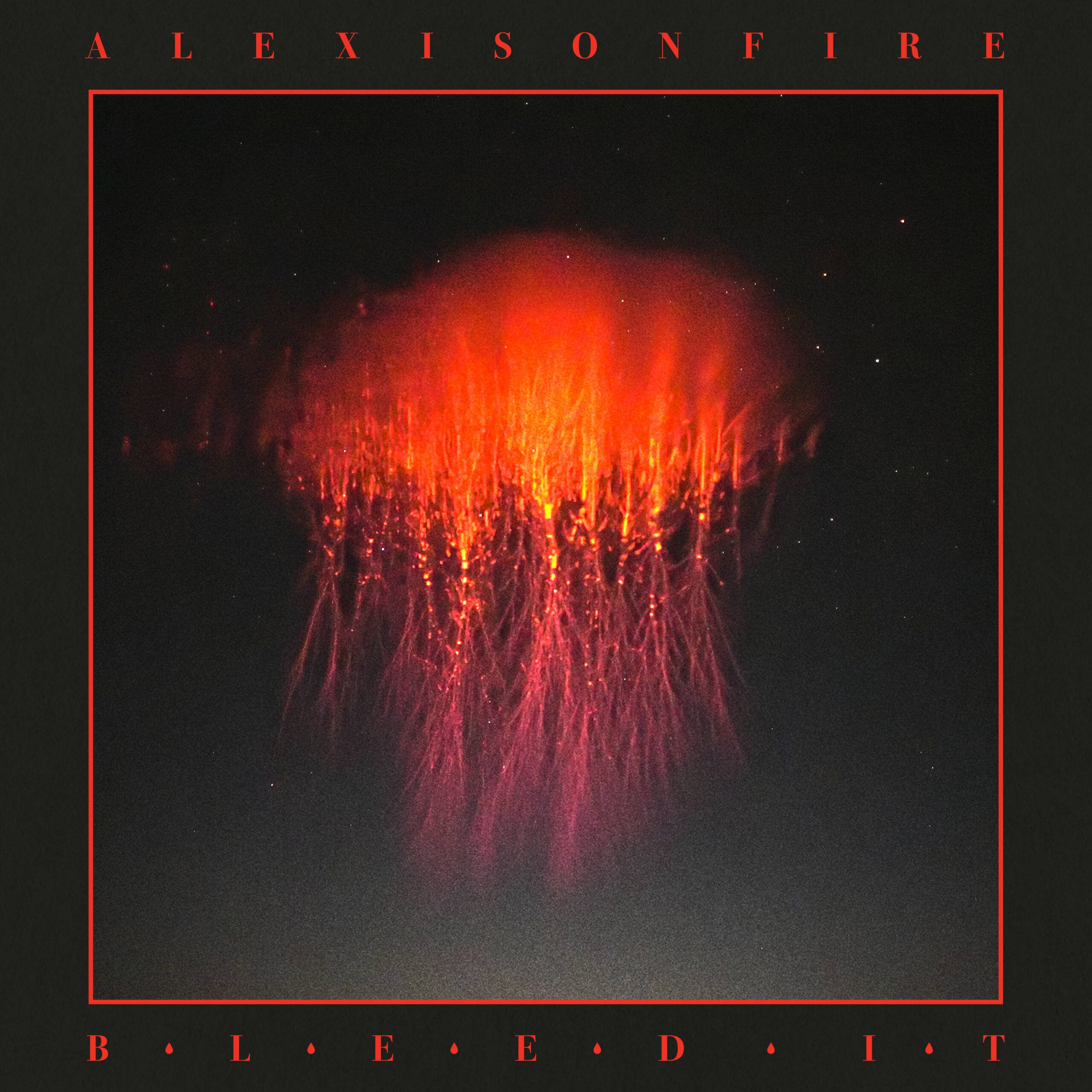
That’s even more evident on Bleed It, which is the band’s sixth, most expansive and collaborative record to date. While fortified by the group’s signature ferocity and galvanizing vocals, the album is also distinguished by rich dynamic shifts, atmospheric arrangements, and influences from industrial and electronic music.
“We’ve always been interested in pushing the band in a lot of different directions,” MacNeil says. “And because we’ve been a band for so long, we’re capable of pulling it off.”
The resulting songs seamlessly combine analog and electronic sounds. Aggressive guitar riffs, gang vocals and an undercurrent of whirring beats propel lead single “Push the River,” an “anthem for the restless thinker,” as Green puts it. “Dogs of Chernobyl” begins with two drum loops drowning in echo and a jagged guitar riff running through a reverse filter, while Massive Attack’s trip-hop grooves and evocative programming are influences on the contemplative “Iron Flowers For for Suzie.”
Bleed It, which is the band’s second album since reuniting in 2015, finds Alexisonfire deliberately challenging their traditional songwriting approach. “Everybody was excited about seeing what could come of us trying to write in a new way,” Green says. “‘Updating our formula’ is the best way to put it, and not just do what we normally do.” Luckily, the band members found a kindred spirit in producer Kevin Ratterman (My Morning Jacket, Emma Ruth Rundle, Ray LaMontagne), who “completely understood what our band was and what we were trying to do with the songs,” says Pettit.
Alexisonfire also started Bleed It with “no real songs pre-written,” Pettit says. “We just booked studio time to see what would come of it.” Over the course of 16 months at Revolution Recording in Toronto, these open-ended demo sessions lent themselves to a different way of writing music. Instead of bringing guitar riffs to the band, Green put together “simple instrumental moods,” like drum loops or a melody-less electronic piece, that everyone could play along to in the studio.
This approach naturally led the group toward different sonic directions. “We wanted to branch out, use technology, and go towards a style we had all loved but hadn’t allowed ourselves to explore yet” Green says.
Alexisonfire later recorded Bleed It at Sonic Ranch in Tornillo, Texas, a legendary studio in the middle of a pecan orchard not far from the Mexican border. Ratterman, who’s also the drummer for the Louisville post-rock band Elliott, intuitively connected with the band’s demos and knew how to amplify Alexisonfire’s strengths. “We really liked the demos,” Pettit says. “But Kevin allowed the songs to bloom and become this new thing. It’s obviously a very diverse record but he found a cohesive way to make them blend together.”
As Bleed It coalesced, Alexisonfire kept gaining creative momentum, which led to some of the album’s most unique moments. Take “Holy Mother,” a massive-sounding song dominated by four-on-the-floor beats, echoing synthesizers and especially soulful vocals. As it happens, Green initially wrote the music for “Holy Mother” for another project. “I showed it to the guys in the studio one day, not ever thinking that it would be an Alexis song,” he says. Unbeknownst to Green, MacNeil had been listening to Robyn’s electro classic “Dancing On My Own” on repeat while driving to rehearsal—and was wondering if Alexisonfire might have a song like that in them: “What’s more punk than making a song that sounds like this?” Needless to say, he was thrilled to hear Green’s idea. “The real outlier songs for me were the ones where I was like, ‘Man, like if Alexisonfire could sound like that, that would be incredible.”
“Holy Mother” ended up going through several iterations before the final version heard on Bleed It. “[But] it felt effortless to make it sound like us,” Steele says. “It’s so cool to be at this place in our lives to be curious and keep on pushing.” That sense of openness also informed the way Alexisonfire approached Bleed It’s lyrics. “Instead of treating it like a segmented thing where ‘I do this, and you do that,’ we are all one,” Green says. “All five of us make this band. So why not treat the songwriting the same way?”
As a result, band members often exchanged ideas and inspirations. For example, “Dogs of Chernobyl” included Green sharing Marie Howe’s poem “Singularity” and encouraging Pettit to write a response, and MacNeil contributing a melody and a poignant line (“I’m getting closer to heaven every day”) after a motorcycle trip to Nepal. “When you get personal with your creative output, it’s frightening to really put it out there, even with four of the people you’ve known your entire life,” MacNeil says. “But I’m able to talk to the guys even about an unfinished idea.”
Other songs on Bleed It find the members of Alexisonfire reflecting on contemporary life and their places within it. “Lyrically, that’s me exploring the general existentialist dilemma of being faced by the mystery of life, and brutality, but still choosing to partake in the world around you,” Pettit says. “And then you start to see love as this really remarkable thing that exists in defiance of a seemingly brutal and uncaring world. Love is this anomaly of evolution.”
In the end, Alexisonfire wasn’t necessarily expecting to make an album like Bleed It. But by being open to possibilities and different modes of working, the band unlocked an incredibly exciting new direction. “The more we worked on the album, and the more everything shifted, what emerged was an anthemic rock record,” MacNeil says. “We weren’t trying to do that. But making the record we didn’t set out to make ended up being the best conceivable thing we could have done.”
Publicity Contacts
Website
Photos