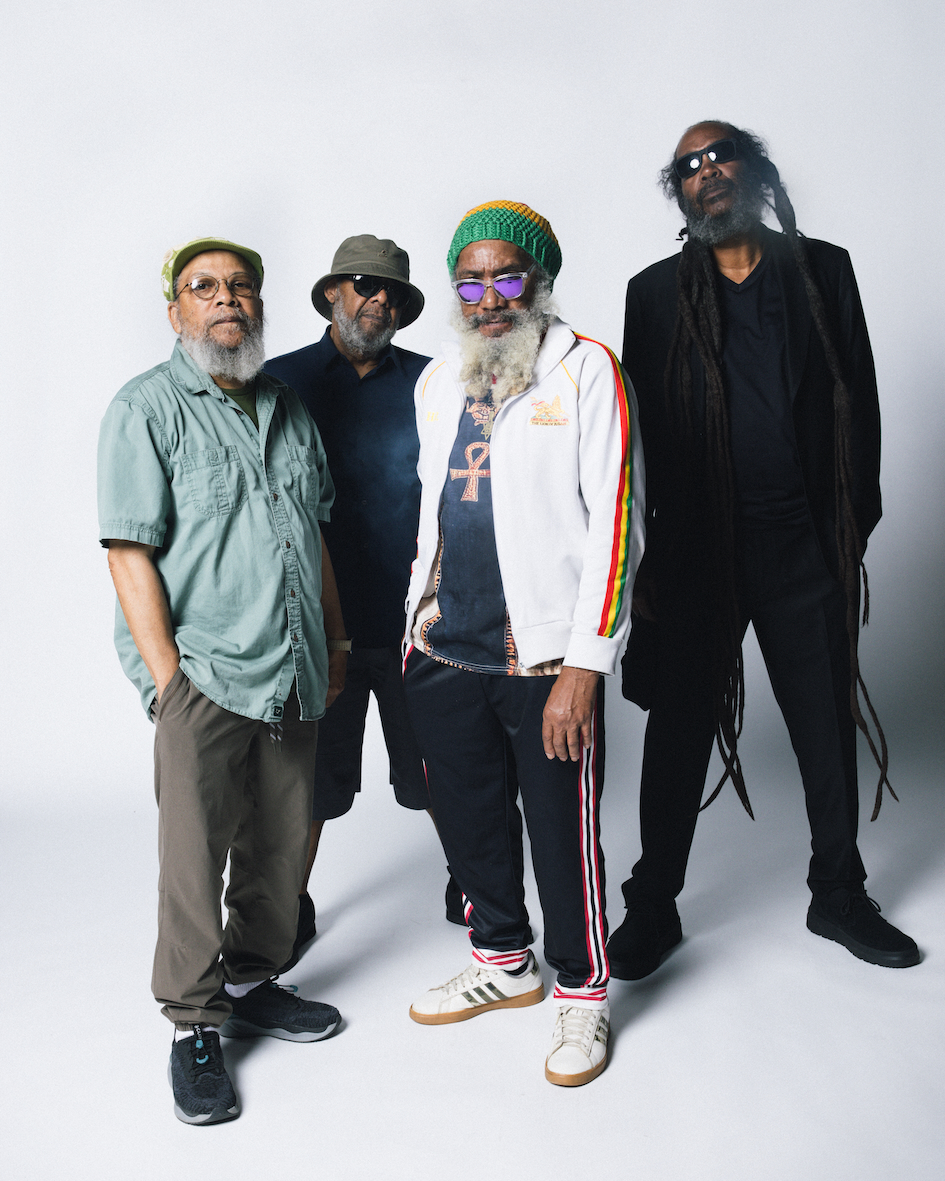
Washington, D.C.’s Bad Brains are one of the most important and influential bands to emerge from the American underground music scene. Formed in 1978, the quartet brought astonishing speed, musicianship, and intensity to punk rock, helping create a wholly new musical approach that would come to be known as hardcore. But Bad Brains were never easily defined by a single genre. Surrounded by the sounds of funk and soul that reverberated through their community, the D.C. quartet also took inspiration from the trailblazing ideals of Mahavishnu Orchestra, Led Zeppelin, Sun Ra Arkestra, and Black Sabbath.
Bad Brains sought to take that maverick spirit and apply it to a new and original sound, one that the band heard with the arrival of the Ramones and punk rock. “We wanted to make sure a lot of our energy was put into executing our riffs and ideas,” recalls Bad Brains’ bassist Darryl Jenifer. “There was no overall vision of what we meant as a band or what it would come to mean to the culture. All we knew was we loved a wild version of rock and roll that they called punk.”
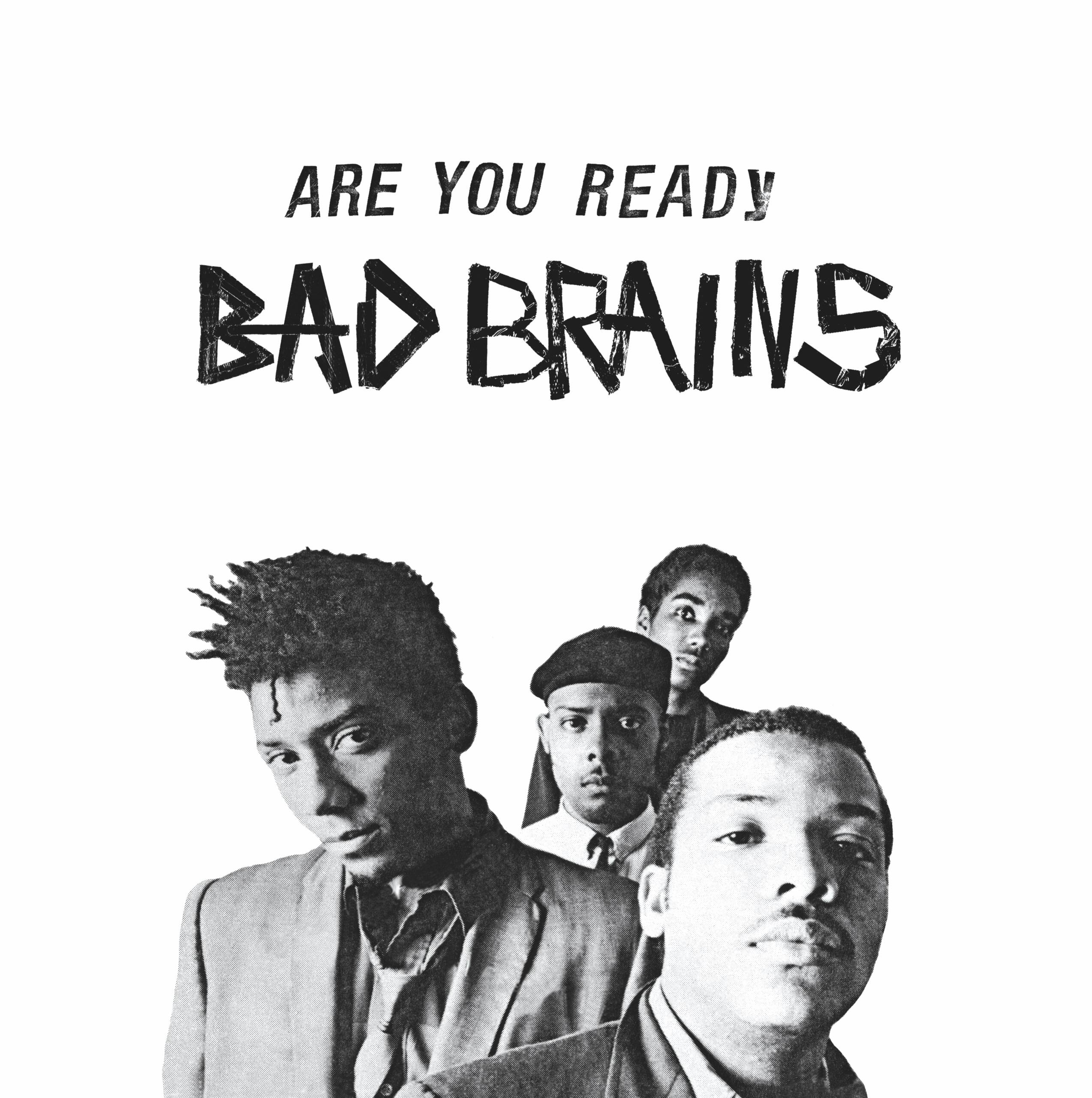
It was during this formative period – March 1979, to be exact – that Bad Brains entered Inner Ear Studios in Arlington, Virginia, for a short session that would become ARE YOU READY: THE FIRST STUDIO RECORDING (Inner Ear – March 1979). As Alec MacKaye recounts in his album liner notes, the story of how this session came to be is nearly as remarkable as the recordings themselves. On the day of recordings the band mistakenly drove to the wrong address, arriving at the studio with only an hour left on their booking. With no time to waste, MacKaye writes, “Bad Brains tore it up,” ripping through six songs of urgent, drum-driven punk rock.” The circumstances only add to the raw, unhinged energy captured on tape – an early document of the speed, precision and sound that would soon become unmistakably Bad Brains. For decades, the recordings circulated unofficially via tape-trading punks in the late ’70s and early ’80s – the ask-a-punk few in the know. This ultra-rare session has now been mixed for release in 2026 by Ian MacKaye and is finally available on vinyl, cassette and digital for the first time ever via Trust Records.
Of the six songs recorded that day, none would prove more consequential than the first studio recording of “Pay to Cum,” which became the blueprint for the Bad Brains sound and a bona fide hardcore classic. Rolling Stone would later describe the band’s early work as “unrestrained fury,” driven by “quick, sinister guitar lines” and “unhinged drumming.” Jenifer says, “the riff for ‘Pay to Cum’ started as a stream of punk rock vibes fueled by the Ramones, The Damned, and Return to Forever. It was a gift that served as a springboard into our sound – sheer, straight-ahead three-chord mayhem with a few breaks and a stop. The title actually meant nothing to us; it was just a fun-loving play on words.”
“Pay to Cum” provides the clearest blueprint for what was to come, but the session as a whole captures Bad Brains in formation. ARE YOU READY also includes early recordings of “Don’t Bother Me,” “Black Dots,” “Migraine,” and “Send No Flowers,” as well as “Jamming at the Atlantis” – six tracks that capture Bad Brains at their earliest incarnation.
Bad Brains followed the recordings on ARE YOU READY with studio demos that would later become the Black Dots LP (1996, recorded in 1979) and the Omega Sessions material (1997, recorded in 1980). Those sessions led to the band’s first official release, the immortal “Pay to Cum 7” (1980), and eventually Bad Brains’ lauded self-titled debut LP, originally issued in 1982 on cassette by ROIR. The iconic yellow cover featuring a lightning bolt striking the U.S. Capitol Building is a design masterpiece, and the music contained therein would go on to become one of the most important and influential recordings in history. The album showcased the band’s signature duality: blisteringly fast hardcore songs such as “Attitude,” “Sailin’ On,” and “Banned in D.C.” alongside deep, dub-influenced reggae tracks reflecting the band’s embrace of Rastafarian spirituality. This fusion of hardcore punk and reggae became a defining element of the Bad Brains sound, along with the PMA (positive mental attitude) message that the band held sacred.
Just like the lightning bolt depicted on the cover of their self-titled debut LP, Bad Brains hit like a lightning strike – causing a total paradigm shift in underground music and inspiring generations of bands that either wanted to be them or wanted to sound like them. ARE YOU READY captures the moment before all of that: before the landmark albums, before the mythology, and before the band knew what it would come to mean to the culture.
The release was produced in cooperation with Bad Brains, mixed by Ian MacKaye in 2026, and mastered by Pete Lyman at Infrasonic. Darryl Jenifer created the “duct-tape logo” that appears on the cover and is used for the Side B etching, as well as the hand-written “Bad Brains” type that appears on the LP label, specifically for the album package. Bryan Ray Turcotte of Kill Your Idols Studio handled the layout and design. The 45 RPM 12” also features a double-sided insert with rarely seen images from the Bad Brains archive and liner notes by Alec MacKaye.
ABOUT BAD BRAINS
Made up of vocalist H.R. (Paul Hudson), guitarist Dr. Know (Gary Miller), bassist Darryl Jenifer, and drummer Earl Hudson, Bad Brains formed in Washington, D.C. in 1978.
More than forty years later, Bad Brains’ live reputation is still untarnished – known worldwide for their explosive performances and astonishing speed. The quartet set a new standard for intensity while maintaining a level of instrumental precision rarely heard in the genre or out of it. And even though their music and message were staunchly rooted in the positive teachings of Think and Grow Rich by Napoleon Hill and PMA (positive mental attitude), the band’s fierce shows almost goaded the crowd into chaos, whipping fans into a mini-riot. As they grew in popularity and their live reputation followed, Bad Brains were eventually banned from performing in several D.C.-area clubs, causing a move to New York City where they would get their strongest footing. There the band truly found their niche, emerging as a central force in the early hardcore scene and regular performers at the iconic club CBGB.
“Our goal with the live show was to precisely execute every detail like a finely tuned NFL team,” says the Jenifer emphatically. “We wanted to meet all counterpoints and color every riff with passion. Every punch, shrill, and stop was executed with love, a sense of purpose, and an exalting to the Great Spirit. I don’t know if our show was better than anyone else’s at the time, but I do know our shows were real.”
As Bad Brains became established as a cultural and popular force through the early ’80s and beyond, the band’s sound continued to evolve and change. Albums such as Rock for Light (1983), I Against I (1986), and Quickness (1989) expanded the band’s repertoire and sonic palette to include elements of metal, funk, and soul, making the almost shapeshifting band further defy expectations. And even though the band’s sound was changing, the cornerstone of Bad Brains – that livewire stage show and an ear for well-honed songwriting – remained intact, maintaining the nail-biting intensity and staggering musicianship that defined their early work.
Despite periods of internal tension and lineup changes over the decades, Bad Brains reunited several times and continued recording and touring. Later releases include Rise (1993), God of Love (1995), I & I Survive (2002), Build a Nation (2007), and Into the Future (2012). By this point, the band’s reputation had been all but cemented as one of the most electrifying acts in rock music, with a reach that extended far beyond punk and underground music. You can hear the influence of Bad Brains in modern acts like Turnstile, Deftones, Playboi Carti and more, as well as classic acts and Top 40 staples like Beastie Boys, Foo Fighters, Green Day, Red Hot Chili Peppers, Nirvana, and beyond. Today, virtually any band with a distorted guitar and a flicker of punk in their DNA can speak at length on the influence of four guys from D.C. who were just trying to be different, and ultimately, themselves.
Publicity Contacts
Website
Photos