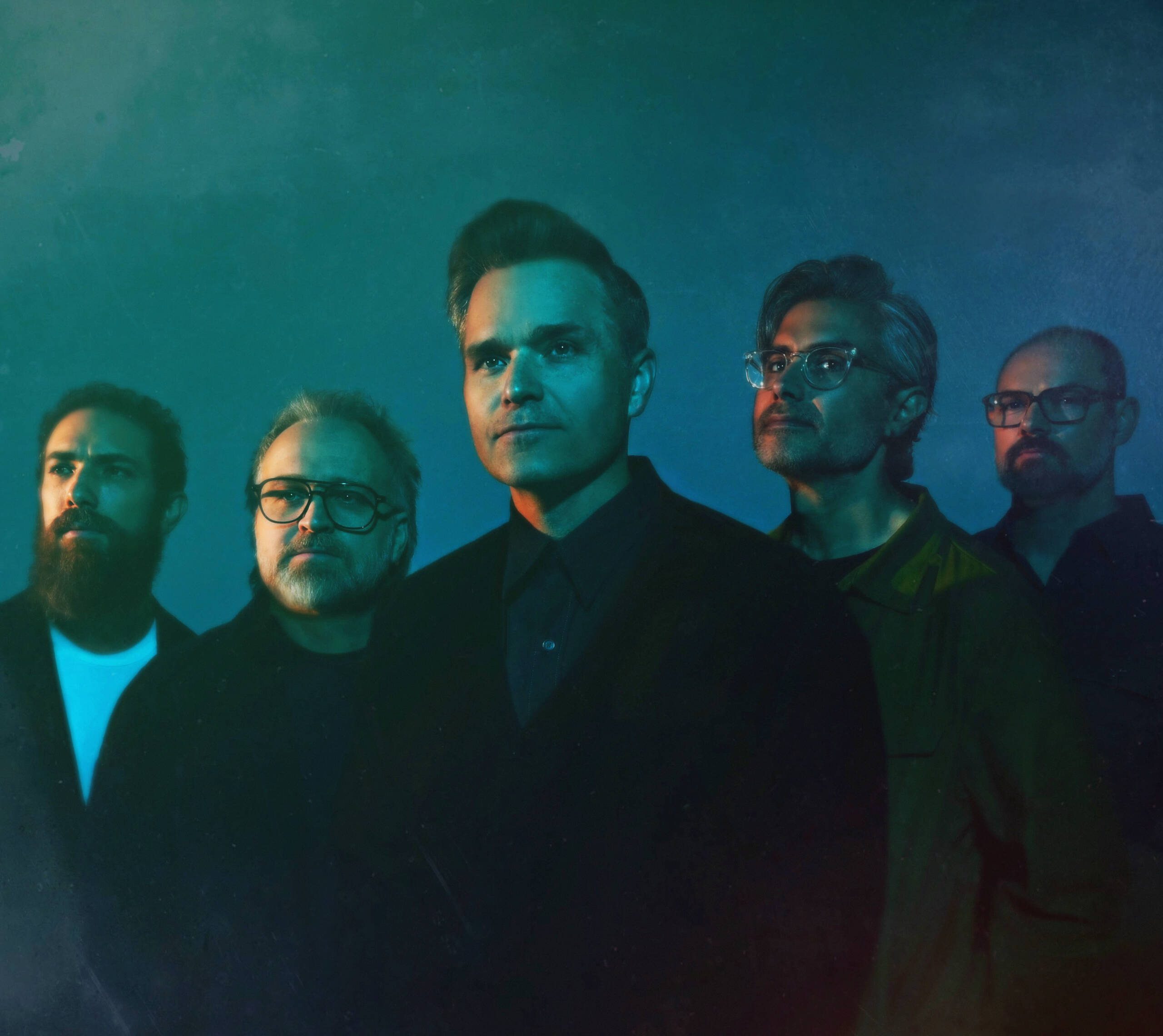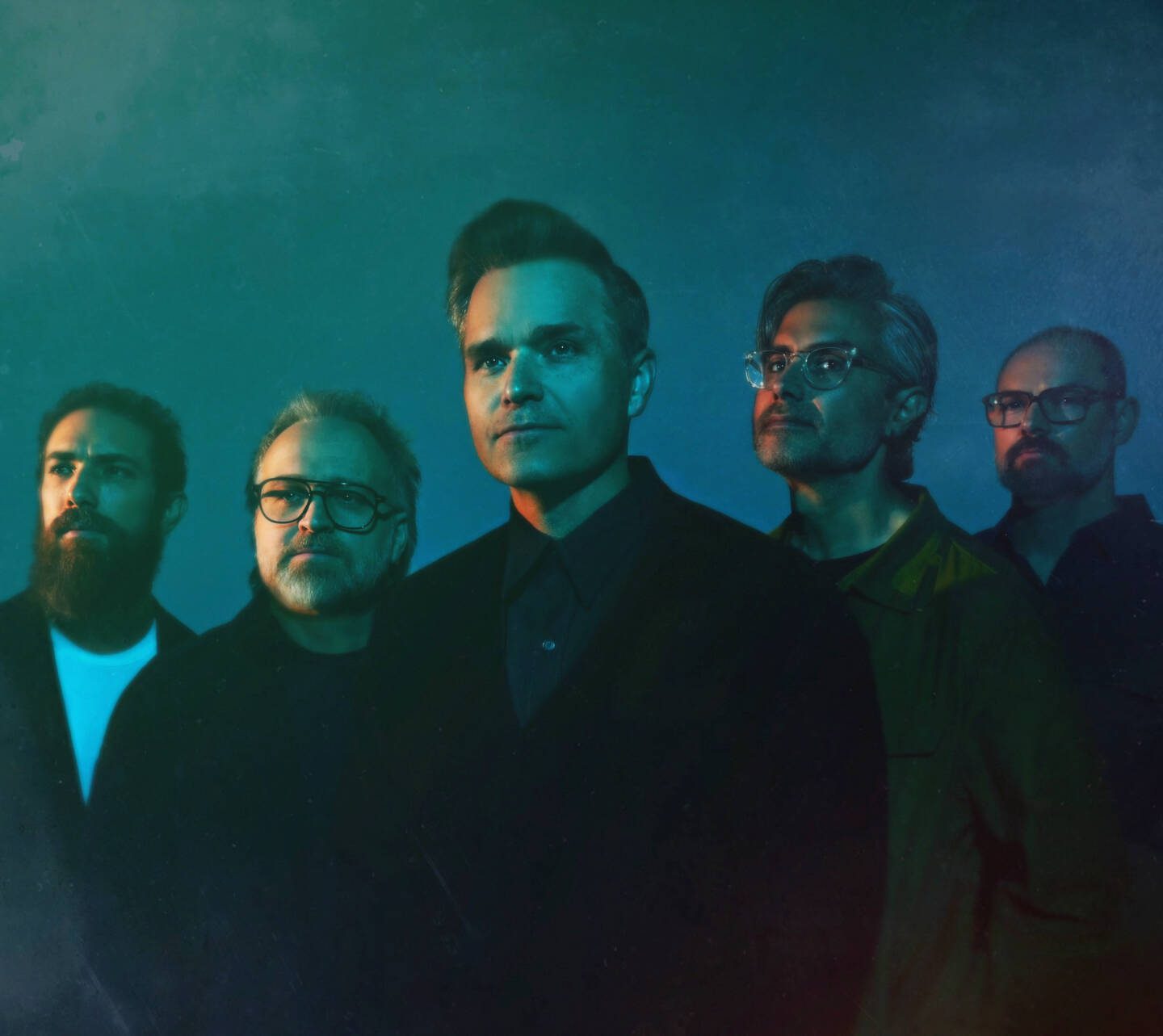
You could easily mistake it for romantic tribute. I Built You A Tower, the phrase that gives Death Cab for Cutie’s eleventh album its title, sounds like a paean or plea to a former love. An obelisk and work of art, a testament to what you had with one another. Something so great surely it could never collapse. But for Ben Gibbard it was quite different, a sturdy tomb of stone in which he could — temporarily and in vain — hide the past away just so he could push through when grief threatened to consume him.
I Built You A Tower is an album of reconciling with past selves in order to locate a new future. This was true for Death Cab for Cutie as much as it was for Gibbard himself. After twenty-odd years in the major label system, the band returned to their indie roots and signed with Anti-. The move coincided with Death Cab embarking on a writing and recording process more akin to their initial run of albums in the late ‘90s and early ‘00s, filtered through lessons learned through the textural experimentation of their ‘10s records and a decade-plus with their current quintet lineup: Gibbard, bassist Nick Harmer, drummer Jason McGerr, and multi-instrumentalists Dave Depper and Zac Rae. “The whole experience of this record got back to the earliest versions of this band: If the musicians in the room like what we’re working on, that’s enough,” Harmer says. “We reconnected with the confidence that comes with that.”
Before all that, Death Cab for Cutie first revisited the past. The 2023-2025 tours celebrating the 20th anniversaries of seminal releases Transatlanticism and Plans were pivotal to the creation of I Built You A Tower. Spending so much time in the world of beloved old releases reminded the quintet the connection they could achieve with fans and each other through more stripped-down songs relative to the layered, maximalist work they had favored in recent years. “Both those anniversary tours were awesome in the old-school sense of the word,” Depper says. “We felt part of this powerful force greater than all of us and went into the studio with a sense of: How can we capture that feeling and put it into something new?”
This is not the dreaded “return-to-form” narrative, but a reclamation of a core ethos that has run through all of Death Cab’s iterations across its 30 years. “The anniversary tours exorcised any nostalgia in our systems,” Depper continues. “I went into this record not thinking about ‘what Death Cab for Cutie sounds like’ whatsoever.” Soon after wrapping the Plans shows, the band gathered in the studio once more with producer John Congleton, harnessing the post-tour energy to record a raw, vulnerable new set of songs from Gibbard with the urgency they demanded.
After 2018’s Thank You For Today found the quintet figuring out how to record together and 2022’s Asphalt Meadows’ pandemic gestation necessitated a remote “chain letter” writing process, I Built You A Tower provided an opportunity to represent the interplay that had developed since Depper and Rae first joined as auxiliary touring members in support of 2015’s Kintsugi. Trusting Congleton after their collaboration on Asphalt Meadows, Death Cab let him lead them into a more pared-down, immediate aesthetic — songs sometimes caustic (Harmer and Depper’s angsty co-write “How Heavenly A State”) and sometimes wistfully twilit (“I Built You A Tower (a)”) always delivered with the lean muscle of the five men in the room with minimal ornamentation. The album came together in a mere three weeks and change, the fastest since The Photo Album. “We weren’t afraid of a deeply human sound, some messiness,” Gibbard asserts. “This isn’t an airbrushed photograph. This is what we look like, this is what we sound like.”
For Gibbard, keeping these songs visceral and undistilled served other purposes, echoing the personal turmoil they depicted and the malleability I Built You A Tower took on over time. During those anniversary tours, Gibbard weathered the greatest pressure of his professional life — fronting both Death Cab and the Postal Service on arena stages for hours a night — while struggling with the collapse of his marriage in the background. The strain felt too much for one person to bear, and the tower originated as a way to protect himself. “There’s this need to find a place in ourselves to put loss and grief,” he explains. “A place that can hold it so we can move on with our lives. But there are these moments where the trauma breaks out of that shell we created for it.”
Though heartbreak remains eternally fertile ground for songwriters, Gibbard was seeking something else when the songs poured out amidst the anniversary tours. I Built You A Tower is not a divorce record, but rather a record about the aftermath — running from or sidelining grief, coming to terms with the emotional debt that accrues, one man’s at-times harrowing reckoning with himself and the past lives left in his wake. There is no score-settling, no bitterness. At least, none aimed at another person. Across the album, you hear Gibbard build a tower while he dismantles himself.
I Built You A Tower’s first feint arrives early, in the chorus of opener “Full Of Stars.” “All I need/ Is for you to be kind/ But it seems/ It’s rarely worth your time,” Gibbard sings in one of many lyrics that might seem directed at an ex yet is instead an indictment of one’s treatment of themselves. Then, from the reflective curtain rise of “Full Of Stars,” the album whiplashes into the gnarled rock of “Punching The Flowers,” in which Gibbard spins a real-life experience of a toddler throwing a tantrum literally punching flowers outside a bodega into a metaphor for a man who has something beautiful and sees its hold over him as a cage, a frustration. Sharp contrasts, a mingling of the beautiful and profane prompted by Congleton, continue throughout, from the grungy churn of “Envy The Birds” to the gorgeous, swelling synth ballad “Trap Door.”
There is a specific arc across the album, from the bad thoughts creeping up in “Pep Talk,” to Gibbard explicitly confessing “I’m trying to hold it together” in “Stone Over Water,” until the propulsive “Riptides” exposes a desperate admission it’s not working. Far from Death Cab for Cutie closers of the past, “I Built You A Tower (b)” offers no quiet resolution, little solace or peace. Inverting its Side A predecessor, it’s an unnerved, distorted catharsis-by-way-of-defeat. “It makes me tired, so tired,” Gibbard sings as it sputters out. Even in a moment of resignation concluding the album on a “to be continued” ellipsis, the band finds transformation. I Built You A Tower captures coping mechanisms failing at every turn, yet nevertheless arrives at a decision to carry on. By the end, the shape of the tower changes.
I Built You A Tower is the sound of loss, compartmentalization, and then grief bursting out from the seams. But it’s also the sound of the growth that comes after falling apart, of acknowledging pain without letting it destroy you. “I see the tower existing on your emotional horizon,” Gibbard concludes. “You don’t always have to look at what’s inside it, but it’s a reminder that it happened. You know it’s there. You have to face it.”
Publicity Contacts
Press Kit
Photos