Exactly 330 seconds into “Little Candle,” Knifeplay erupts. The eight-minute beauty is the second song on What Is Truth?, the Philadelphia band’s aching and strangely assuring third album. For the first five minutes, the band drifts through a gorgeous hum of picked acoustics and chiming electrics, brushed drums and measured vocals. And then, unexpectedly but certainly not inexplicably, the song explodes into a full-on blast beat, sheets of noise spiraling inside the rhythmic melee. Knifeplay founder Tj Strohmer spent his adolescence invested in heavy music, the malevolent sound a crucial component of his entrance into adulthood, of the way he experienced the world. During the last decade, though, the pieces of Knifeplay’s exquisite torment—slowcore, cinematic instrumentals, the haziest outposts of classic rock—have superseded that early interest. But when Strohmer reached the end of “Little Candle,” a keening country song about the vulnerability wrought from failed friendships and the exhaustion of “praying for labor to turn into freedom,” he knew that an outburst was imperative, an honest way for the music to mirror the lyrical frustration, to share exactly how he and maybe you, too, feel.
That minute of “Little Candle” is not the only time Knifeplay translates lyrical anguish into violent sound during What Is Truth? They lunge like metal-clad beasts during a mid-album reprise of opener “Toil,” let sparks fly from an iridescent interlude during the brilliant “Agonizing Mountain.” But these are the exceptions. Through the beautiful but wounded dozen tracks of What Is Truth?, Knifeplay largely transmutes the agony of our experience into sounds that are painterly like a sunset or graceful like a lullaby, as if the Philadelphia six-piece is trying to sweeten the bitterness of reality with the honey of pretty sound. With their backlit harmonies, languid rhythms, and guitar lines that open like invitations, these songs are an ark in a flood, a church amid a crisis, a long hug from an old friend at the precipice of a breakdown—any place you can seek succor while being real about how challenging our lives can get. What Is Truth?, then, is a sanctuary, built not only for being honest about what most people are up against as they simply survive but also for turning towards hope and love, wherever they may find it.
Strohmer grew up far outside of a city, in a rural and culturally conservative part of southern Maryland. He was at odds with the area’s values from an early age, making him feel like an outcast despite his parents’ support of his musical interests, from taxiing him to guitar lessons with a local musician to hosting practices and the occasional show in their home. He found community and value in a scene that spanned the multi-state DMV and, at 18, moved to Philadelphia to invest himself in its teeming culture. To some extent, he brought his past with him, not only using Knifeplay’s early music to process the losses and pains of where he’d come from but also sometimes doing so with sounds that reflected his rural past alongside his big-city present. He began to see the true spread of suffering, how people in the place he was from and the one to which he had come all struggled to exist. This understanding shaped Strohmer and, so, Knifeplay.
A dozen years have passed since that move; given the upheaval of the subsequent span, those feelings have only intensified. Strohmer wrote What Is Truth? across four years while navigating consistent depression, of seeing his surroundings through a filter of gray and considering how it is we all make it from one day to the next, through an entire life. Those questions are at the core of What Is Truth?. It is important to note here, though, that this is not a Philadelphia record; though it is Knifeplay’s home, the litany of grievances here—the end of Eden and innocence, the sense of cosmic abandonment, the agony of loss—are not unique to the city, as resonant wherever Knifeplay’s tour van happened to stop during those last four years as wherever Knifeplay happens to reside.
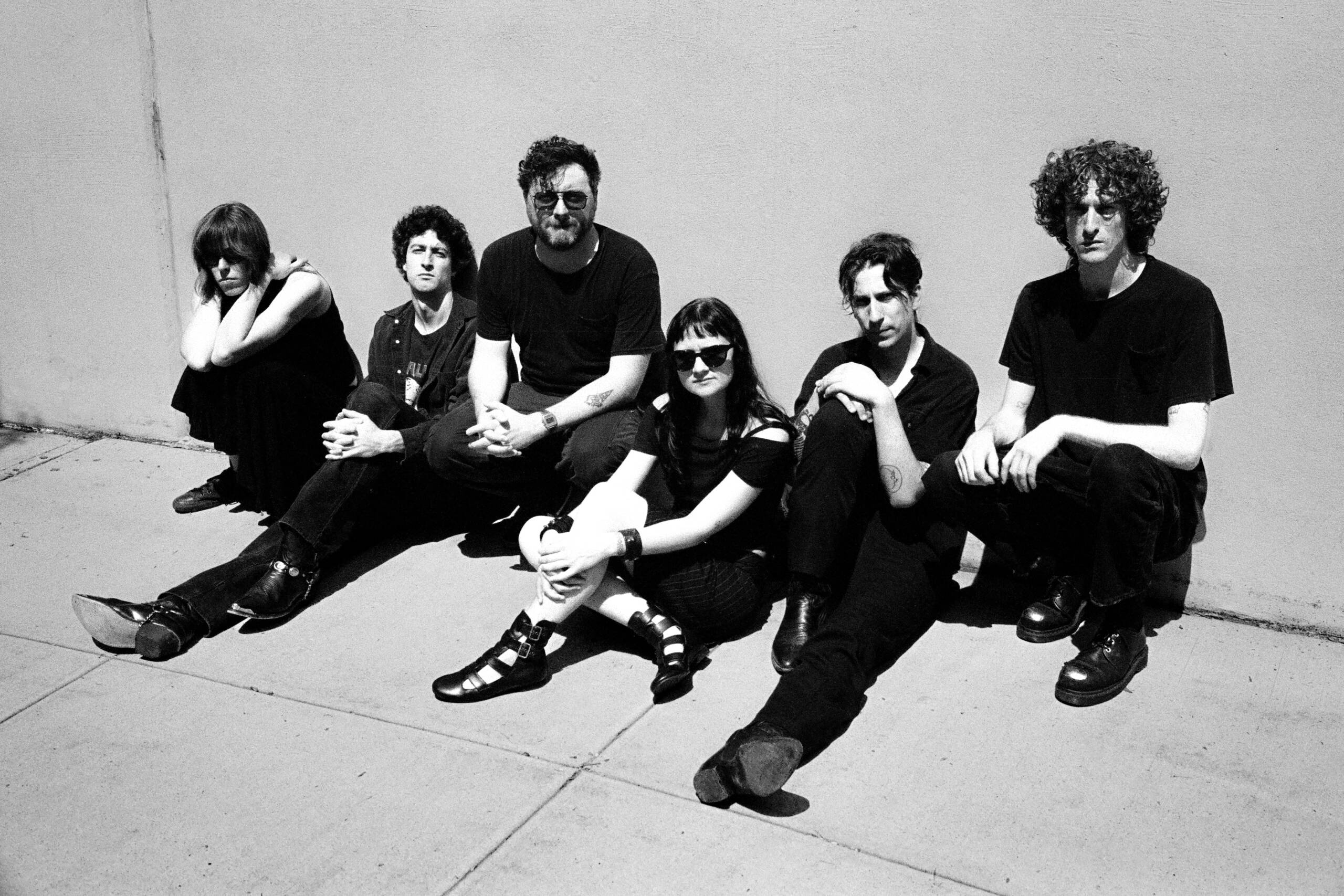
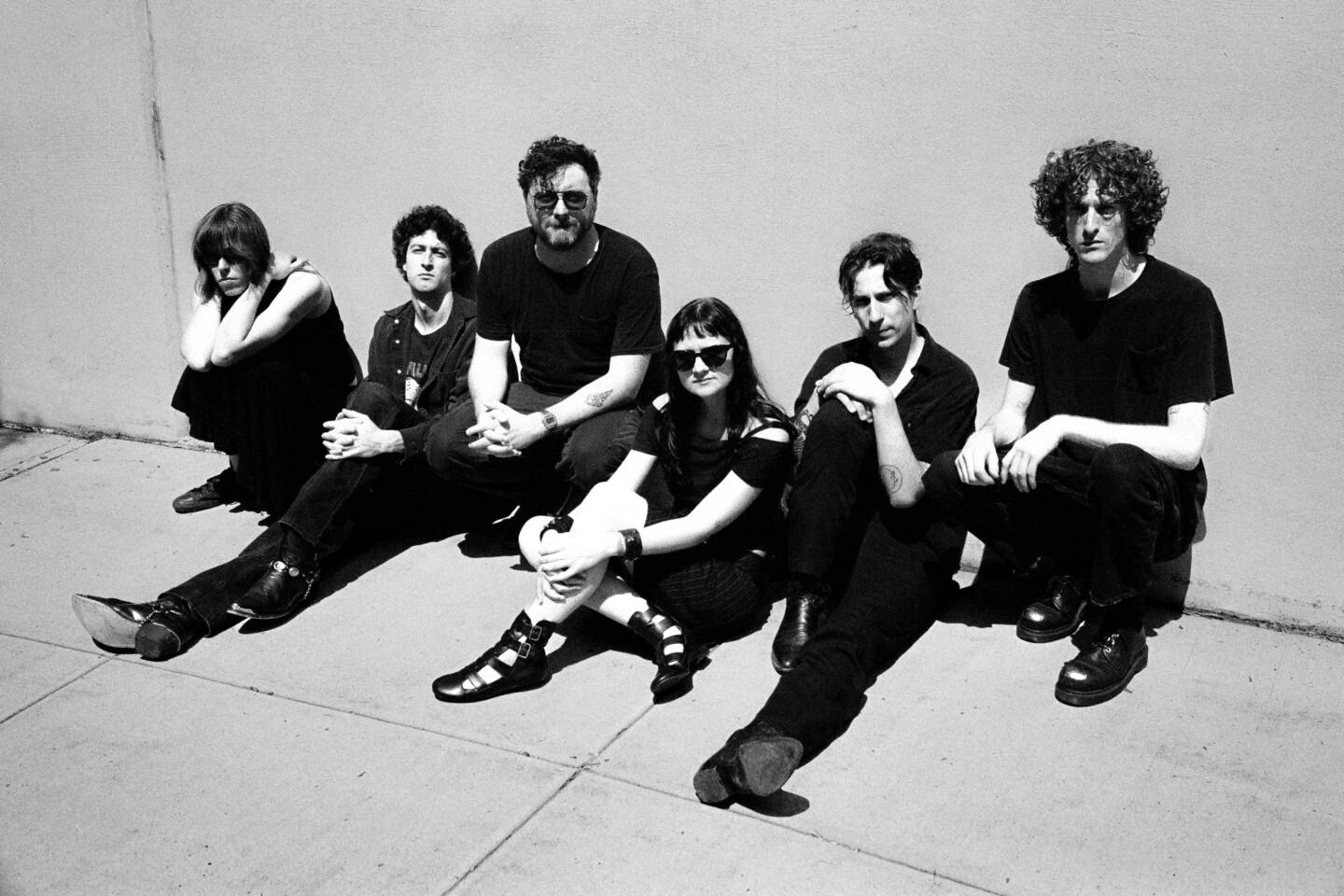
When Knifeplay began, Strohmer wrote and recorded many of the parts himself, but Knifeplay is now a real, working band—bassist Alex Stackhouse, keyboardist Max Black, drummers Joey Ginaldi and Nora Maupin, guitarist John Klein, and singer and guitarist Johanna Baumann, who recorded all of this album in three Philadelphia studios, including her own, and whose voice forms a perfect timbral tandem with Strohmer. (Guitarist Dennis Martinelli has since stepped in for Klein as a guitarist, while Ginaldi has left Knifeplay.) The collaborative process behind What Is Truth? gave Strohmer a sense of shared trust and purpose. For the first time, he could drill down on writing and singing exactly what he meant, knowing that the band would help him translate his feelings and ideas into vivid sound.
What Is Truth? follows the same general arc, gradually moving from the deepest dark toward beckoning light. “Agonizing Mountain” does not imagine Sisyphus happy, its tragically ordinary protagonist trying to negotiate the hellish landscape into which he was born, trying to navigate the impossibly steep slopes of some climb-less climb. Baumann’s harmonies above the sighing slide guitar make it clear that this is less about Strohmer and more about the woes we all share. Baumann sings lead on the devastating “Joy,” an anhedonic anthem so frank about existential malaise that it feels like a true bottom, where the specter of suicide scares you so much you just keep trudging along, drowning feelings in whatever way you must. “I will lose myself in laughter as I mourn the dying embers of my youth,” she sings near the end, her graceful monotone like a taunt.
The 10-minute “Love Song” is honest but also aspirational, building from the axiom that we are all born from and into damage toward the idea that, if we can’t necessarily mend each other, we can at least help one another muddle through. The electric guitars that roar beneath the acoustics somehow sound both like hope and also the absence of it, like potential deliverance or damnation. Can anything work out after all? And with its stately piano and slowly trotting drums, “Take the Light” sounds majestic and magnetic, as if asking you to join Strohmer and Baumann in their little choir of two. But it is a kneecapping sort of song about how our very birth disrupts the world’s order, about how the start of our life pushes our mothers to the edge of death; its implications expand ever outward, to the moment humanity started and our concomitant troubles unspooled. “And then the humming of our suffering had begun,” Strohmer and Baumann sing together in hangdog harmony. “And then the harmony of nature came undone.”
But yet again, something unexpected arrives. After 11 songs that survey Strohmer’s laments in the vivid and precise language of a songwriter who has truly found his own voice, he offers a closing solution with “Please Let the Children Be Artists.” It is not some saccharine-sweet hippie dream; Strohmer still opens with an experiential portrait of despair, of the manifold ways the world can go wrong. But when he hits the chorus, he delivers it like a hymn of absolute belief and hope. “Please let the children be artists,” he sings, Baumann echoing him with her vocal choir of bells, echoing the good news. “They can color in the sad world we’ve made.” There are glimpses of happiness scattered throughout What Is Truth?, but this finale reflects what Strohmer has found in his own experience and wishes for the rest of the world—that to sing these blues with a few friends you can trust is to just maybe finally find a way out of or at least around them, too. What else can we wish for?
What Is Truth? is almost exactly 80 minutes long, meaning it’s the kind of record you would have stuffed onto a CD-R back in the days when Low were still on Kranky, when Red House Painters were still working, when Ida were making a major label pay for their masterpiece. Strohmer laughs as he admits that he knows this isn’t a record for modern attention spans—a slow but stunning hour-plus, stretched across 12 patient pieces. He’s OK with that: These songs are where he reckons with the world, where he considers what it means for anyone to endure as a human. As Strohmer sings in a perfect line that reads like a mission statement, “This is what we admit in the confusion of being honest.” This work takes time. In his heaviest days, Strohmer found consolation in writers and singers who had been there, too, pushing through despair and possibly even toward something better. What Is Truth? mirrors those predecessors and so feels like an offering, a beacon flashing through the dark, an invitation to keep moving forward.