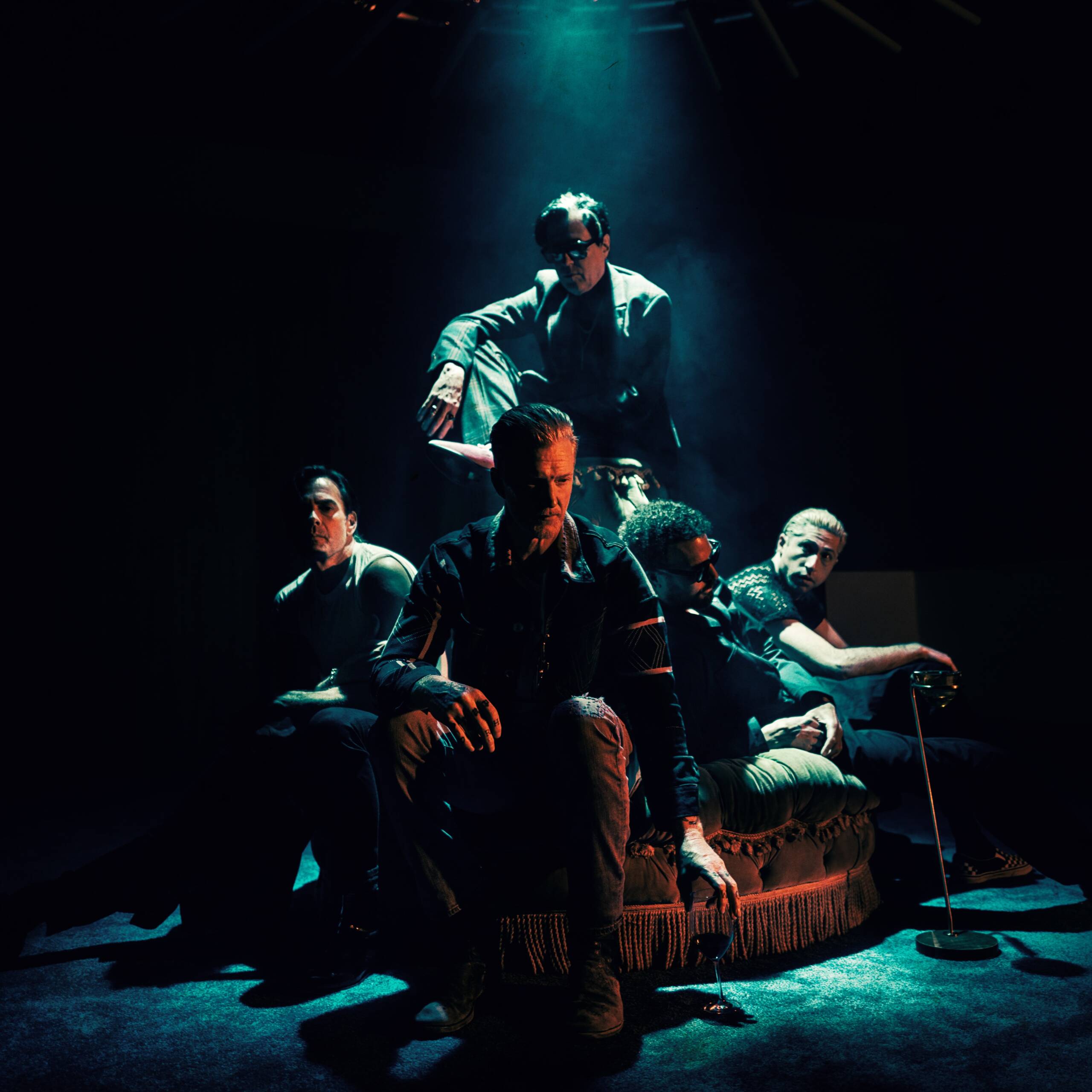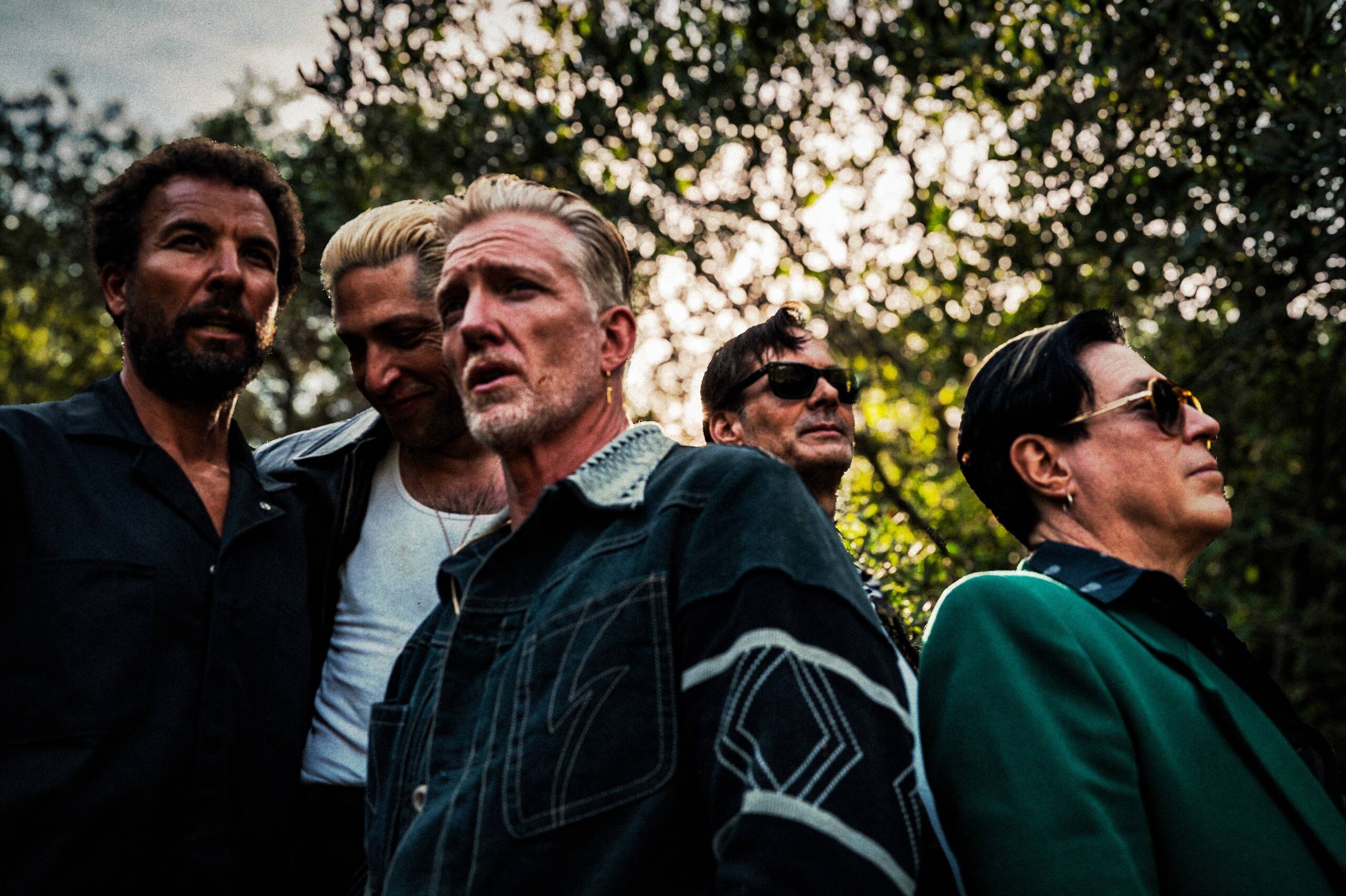
Queens of the Stone Age – Joshua Homme, Troy Van Leeuwen, Michael Shuman, Dean Fertita, Jon Theodore – have remained enduringly, singularly magnetic. It isn’t just their sound. It’s their spirit. They are provocative in the most essential sense: unafraid to explore the dark, the sexual, the surreal, the absurd. It’s art that snarls and seduces in equal measure.
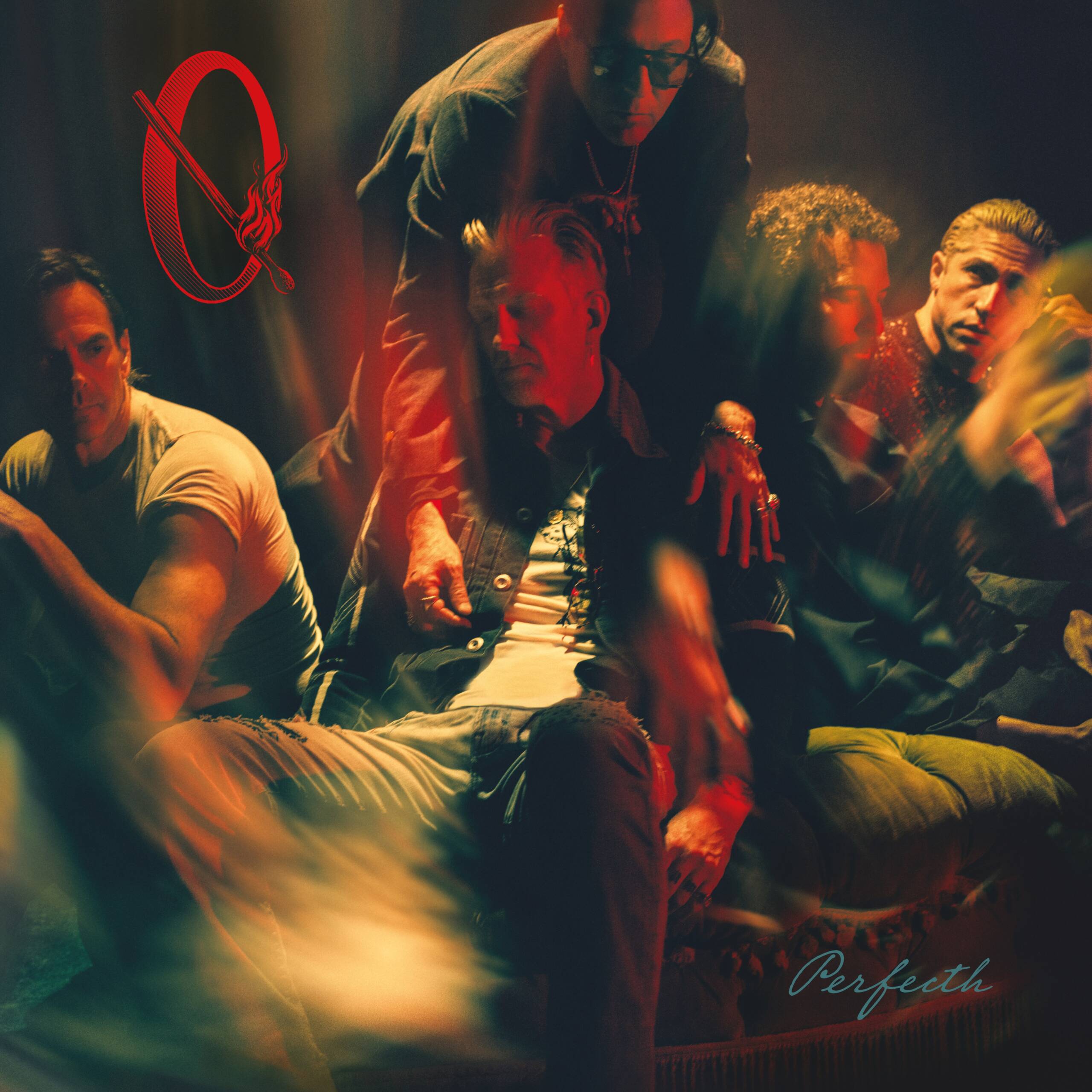
The quintet’s ninth album, Perfecth, arrives at a moment of hard-won clarity for the band. The record’s nine songs map different forms of love: of family, friends, and others both significant and insignificant. The loves that break you beyond survival and the loves that put you back together.
Kintsugi — the Japanese art of repairing broken pottery by filling its cracks with gold — holds that what has been shattered is made more beautiful, not less, by the act of repair. This is the spirit in which Perfecth was made. Here, Queens have moved a career’s worth of jagged pieces into alignment. The music is fearless and boundless, moody and menacing, gentle and strange. A mended object tells the whole story: of wear and tear, of trauma, and of experience. “Every song sounds like it’s from a different zone,” says Homme. “And that’s on purpose, because it’s trying to stitch together all these emotions revolving around love, lust, foolishness, and the sort of wisdom that comes as a gift from all that.”
Perfecth was realized across a series of studios, cities, and timelines. There is no tidy map. The songs refused to be rushed. In order to get over them over the finish line, life needed to happen. “The reason these songs didn’t get finished until now is because I wasn’t qualified to finish them, yet,” Homme admits.
“Insignificant Other” is the album’s centerpiece. It’s the second of only two takes and captures the quintet playing loose and unguarded, embracing accidents and making space for one another on the fly. It’s ensemble-playing at a supernatural level. “We all knew that a whole record could be built around something like this,” recalls Homme. The mood is reflective and the feel is decidedly after-midnight. It’s a song about distance. About how someone can be your entire world only to simply vanish. And about the strange vertigo of being on the receiving end of that for the first time.
Recording for Perfecth began in earnest after touring the Catacombs project – a cinematic, stripped-back, and cathartic reimagining of the band’s catalog filmed in an ossuary deep beneath Paris. Inspired by the album and subsequent tour’s effusive reception, Queens launched into sessions in New Orleans right before Mardi Gras. Deliberately throwing themselves into the chaos of the city, they laid down “Sunday,” a co-write with Iggy Pop originally featured on his album Post Pop Depression. “The record required some joyful bubbling, even though the lyric is sort of asking ‘what is this all for?’,” says Homme. “I had sung it just like Iggy, which felt wrong, and then I found a through line that mixed it more like French disco. A very dance floor version.”
“Easy Street” is serene and perfectly imperfect — acoustic guitars, psychedelic synth flourishes, and a rhythm track that breathes on its own. Beneath the surface: raw edges and withering wit. Singer Nikki Lane guests on vocals, arriving like gravel and honey with a Wanda Jackson grit. Her voice flips the sonic script against Homme’s smoother lead line. The song came together like a demo would – a casual take with no click track, mistakes left intact. And all of that, it turns out, is exactly right. The imperfections don’t undermine the song; they *are* the song.
“Mono” is the album’s most naked and devastating track, its sound perfectly capturing the head spinning feeling of heartbreak – lost, out of time, and out of reach from the world. The mix slips seamlessly from mono to stereo, from claustrophobia to widescreen orchestral grandeur. From coal to flame. On “Mono” Queens look unflinchingly into the dark and draw out one of their most intricate, expressive, and illuminated compositions to date. It’s the sound of a band with nothing left to prove and everything left to say.
The record is called Perfecth because “perfect,” as a word, has never been honest. It doesn’t exist. So, Homme broke the word and made it “perfecth,” a more appropriate spelling for a term that never felt right to begin with. “Nothing in this world is perfect, but everything seems to be ‘perfecth’,” explains Homme. “And that title is funny when you’re in a group, but it ain’t so fucking funny when you’re alone and you realize how imperfect everything is. It’s the struggle.”
Publicity Contacts
Website
Photos